The cold chain rarely breaks down in one noticeable event. The cargo may not look damaged, the packaging remains intact, the refrigeration unit continues to work, and the display shows a perfectly acceptable temperature at the time of acceptance. And yet, inside this seemingly prosperous picture, a violation that occurred several hours or even days ago may be hidden.
For temperature-sensitive cargoes, this is a particularly dangerous situation. A product can change its properties due to brief overheating, freezing, or insufficient cooling, and the consequences do not always appear immediately. Therefore, when a dispute arises, it is not enough to simply look at the thermometer reading at the time of unloading and draw a conclusion about the safety of the cargo.
The surveyor’s task in such a situation is to restore the actual picture of events. It is necessary to determine what temperature regime was set, what values were actually recorded, when the deviation occurred, how long it lasted, where the cargo was at that moment, and what circumstances could have affected the condition of the products. It is this approach that turns scattered instrument readings and documents into an evidence base for decision-making.
What is a cold chain break
The cold chain is a sequence of storage, handling, and transportation conditions under which a temperature-sensitive cargo must remain within the established range. It does not start at the moment the cargo is placed in the refrigerator, nor does it end when the container is opened at the consignee’s warehouse. There can be many intermediate operations between the manufacturer and the final destination, and each of them can become a source of temperature deviation.
A cold chain break occurs when actual conditions fall outside the requirements established for a specific cargo. Moreover, a violation does not necessarily look like a sharp temperature jump. Sometimes the temperature gradually rises, remains outside the acceptable range for a relatively long time, and then returns to normal values again.
For an investigation, it is fundamentally important to understand that the fact of the temperature returning to normal does not cancel the previous deviation. If the logger shows that the cargo was outside the acceptable range for several hours, the subsequent temperature restoration does not erase this part of the temperature history. Therefore, the surveyor analyzes not only the current condition, but also the sequence of readings for the entire period of interest.
Why a single temperature measurement does not provide a complete picture
Imagine a refrigerator whose doors are opened after a long transport. A surveyor measures the temperature in the cargo space and gets a value corresponding to the set range. Can we say based on this that the cold chain has not been broken? No, because a single measurement only reflects the condition at a specific moment.
A few hours before the inspection, the temperature could have differed significantly. It could have risen during a stop with the power off, during a malfunction of the refrigeration unit, during transshipment, or when opening the doors. After resuming equipment operation, the system could have returned the temperature to a normal value even before the surveyor arrived.
That is precisely why investigating a temperature incident requires a temporal sequence of data. It is important to know not only “how many degrees it is now,” but also “what happened to the temperature before this.”
Determining the temperature range
Before the start of the inspection, the surveyor needs to understand against what requirements the assessment is being conducted. If the range is not determined, the thermometer reading itself does not allow classifying it as a violation.
The source of the requirements may depend on the nature of the cargo and contractual conditions. This can be the manufacturer’s specification, transportation instructions, contract terms, insurer’s requirements, technical documentation, or other agreed parameters.
Special attention should be paid to units of measurement and wording. A requirement to “store at a temperature no higher than a certain value” differs from a requirement to maintain the temperature within a specific range. The difference between these wordings directly affects data interpretation.
Before starting the check, it is useful to establish several initial parameters:
- acceptable temperature range;
- maximum allowable short-term deviations;
- maximum duration of staying outside the range;
- requirements for pre-cooling;
- admissibility of freezing or thawing;
- location and period for which it is necessary to check the temperature history;
- procedure upon detecting a deviation.
These parameters become the starting point for subsequent analysis. Without them, a surveyor can reliably record the temperature, but will not be able to correctly assess its compliance with the requirements of a specific cargo.
How a temperature incident survey begins
A temperature survey does not necessarily start with a temperature measurement. First, it is necessary to determine the object of control and the circumstances under which the question of a possible violation arose.
The surveyor finds out where the cargo is located, who is responsible for its storage or transportation, what transport was used, what operations have already been carried out, and when a potential problem was discovered. At the same time, available documents and monitoring data are collected.
This is especially important when time has passed between the alleged violation and the moment of inspection. The greater the time gap, the more important documentary and electronic data become, allowing the events to be reconstructed.
Checking the vehicle
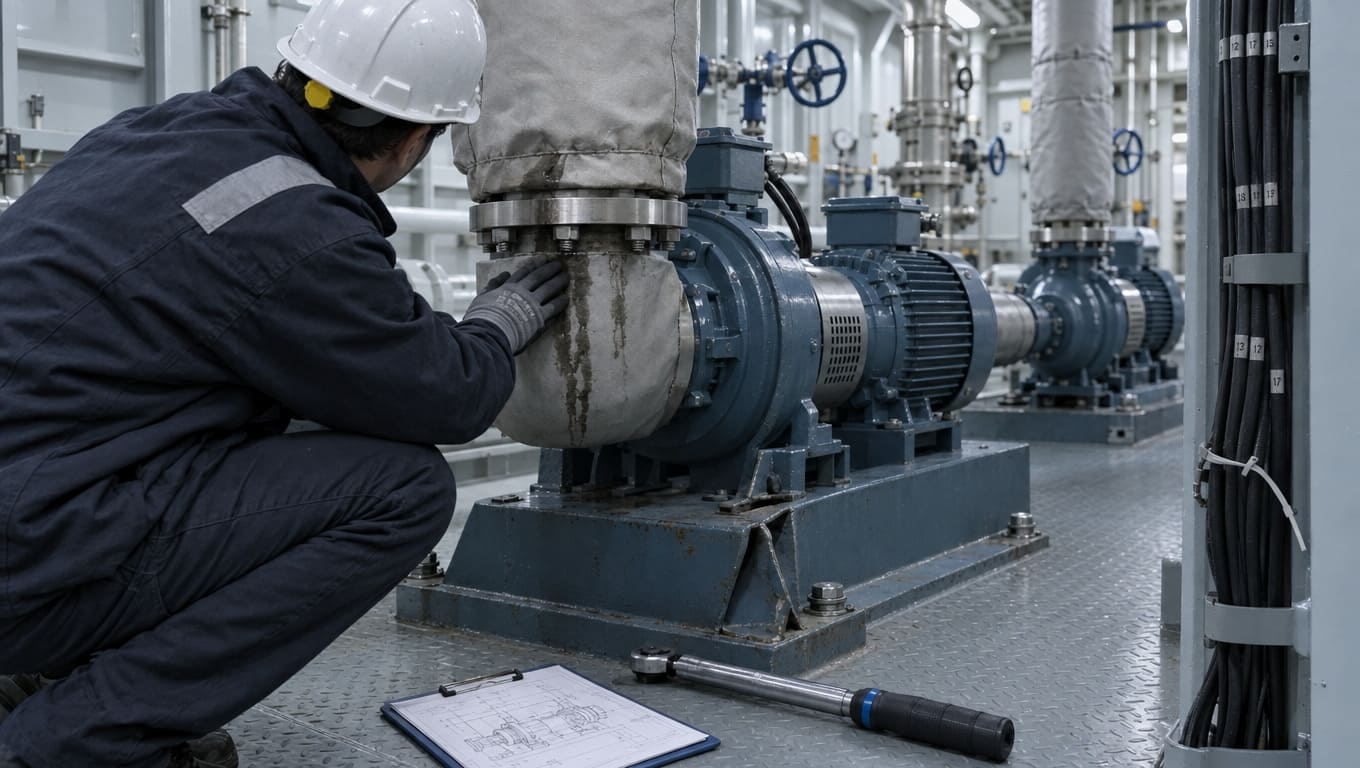
If the cargo was transported in a refrigerated vehicle or container, the condition of the equipment itself becomes part of the investigation. It is not enough to check only the goods, since the cause of the deviation may be related to the operation of the refrigeration unit or the organization of transportation.
The surveyor pays attention to the condition of the refrigeration equipment, system settings, display readings, and available records. The condition of the cargo space, arrangement of the goods, presence of obstacles to air circulation, and other circumstances that can affect the temperature regime may also be recorded.
It is important to document the actual condition at the time of the inspection. A photograph of the display can confirm a specific reading, but by itself, it does not show what happened to the temperature over the previous hours or days.
Why the condition of the container also matters
The cold chain depends not only on the refrigeration unit. The condition of the container or body itself can significantly affect the ability to maintain the set regime. The surveyor can check the condition of doors and seals, the presence of visible damage, the condition of the internal space, and circumstances that could have disrupted the normal operation of the cooling system. If signs of a compromised seal or damage are found, they must be recorded separately.
At the same time, visual inspection should not turn into an attempt to determine the cause of the temperature deviation without evidence. The surveyor records observed circumstances, while a cause-and-effect conclusion requires a comparison of all available data.
Temperature loggers: the main source of history
A temperature logger provides information not about a single moment, but about a sequence of temperature changes. That is precisely why its data are of great importance when investigating a possible cold chain break.
The recorder can log the temperature at specific intervals. As a result, a graph appears showing the increase or decrease in temperature, the duration of the deviation, and the moment it returned to the set values.
But even the presence of a logger does not mean automatically obtaining an unconditionally reliable result. It is necessary to consider the condition of the device, its settings, the recording period, the position of the sensor, and the correctness of data interpretation.
What a surveyor analyzes in a temperature graph
The highest or lowest recorded temperature is only one of the parameters. In a real investigation, the duration of the cargo’s stay outside the acceptable range is often much more important.
For example, a brief deviation by a small amount and several hours at a significantly elevated temperature are completely different situations. Even if the maximum value in both cases is the same, the consequences can differ fundamentally.
Therefore, when analyzing temperature history, it is important to establish the beginning of the deviation, its peak, duration, the moment it returned to the acceptable range, and the subsequent temperature stability. Such a graph allows moving from the abstract phrase “the temperature was elevated” to a specific description of the event.
To determine the moment of violation, it is necessary to compare temperature data with a timeline. Here, the correctness of the time on the logger is of particular importance. If the device’s clock is set incorrectly or the data is presented without taking into account the time zone, one can make a mistake when comparing a temperature event with loading, unloading, power outage, or vehicle parking operations.
Therefore, timestamps must be compared with other sources. These can be transport documents, terminal records, GPS data, the refrigeration unit log, photographs, carrier messages, and acceptance acts. The more independent sources confirm the same sequence of events, the more reliable the reconstruction of what happened.
A temperature deviation does not necessarily occur directly during transportation. The problem could have appeared even before loading, for example, if the cargo was not properly cooled before shipment. Another possible scenario involves waiting at the warehouse. Products can be outside the necessary conditions during preparation for loading, especially if the operation takes longer than planned.
A separate risk arises during transshipment between modes of transport. If cargo is removed from one temperature-controlled space and not immediately placed into another, a potential window for a violation occurs. Therefore, during an investigation, it is necessary to consider the entire chain and not automatically link the deviation to the carrier.
Most common risk stages
Temperature violations can occur at different points in the logistics process, and some of them are associated not with equipment malfunction, but with the organization of operations.
In practice, special attention is required for:
- pre-cooling of the cargo and vehicle;
- waiting before loading;
- actual loading operations;
- prolonged opening of doors;
- parking without power supply;
- transshipment between vehicles;
- storage at the terminal;
- refrigeration unit malfunction;
- incorrect temperature equipment settings;
- unloading and acceptance.
This list does not mean that every such stage is necessarily a source of violation. It shows which points need to be considered when restoring temperature history.
Temperature control during loading
Loading is often perceived as a purely physical operation, however, for temperature-sensitive cargo, it is also a critical moment for maintaining the cold chain. As long as the doors are open, ambient air enters the cargo space, and the duration of the operation directly affects the conditions inside.
The surveyor records the start and end times of loading, the condition of the cargo and vehicle, readings of available instruments, and other significant circumstances. If there are signs that the set regime is not being maintained, this must be recorded before departure.
The starting point is especially important. If the cargo temperature already did not meet the requirements before transportation began, further temperature increases cannot automatically be attributed to the carrier.
Checking pre-cooling
Pre-cooling is of great importance for certain categories of goods. The refrigeration unit can maintain the required temperature inside the body, but this does not mean that the cargo itself was cooled to the required state.
If warm goods are placed in the refrigerator, the equipment will spend time and energy cooling them. Depending on the mass of the cargo, packaging, ambient temperature, and unit power, the process can take a significant amount of time.
Therefore, surveying control may include recording the conditions before loading begins and the actual condition of the cargo. This allows separating two different situations: a regime violation due to transportation and improper preparation of the goods before shipment.
What happens during transportation
During transportation, the temperature regime depends on the operation of refrigeration equipment, external temperature, route duration, vehicle condition, and many organizational factors. At the same time, the driver or operator is not always able to visually detect a problem.
Modern monitoring systems allow obtaining a history of temperature changes. However, these data must be considered together with information about the operation of the refrigeration unit and vehicle movement.
If the graph shows a temperature increase simultaneously with a long stop, that is one scenario. If the temperature began to rise while moving and simultaneously signs of equipment malfunction appeared, another cause is possible.
The surveyor’s task is not to choose a convenient version, but to compare facts.
Control upon unloading
The moment a vehicle is opened often becomes the consignee’s first visual contact with the cargo. But by this time, a significant part of the story has already ended.
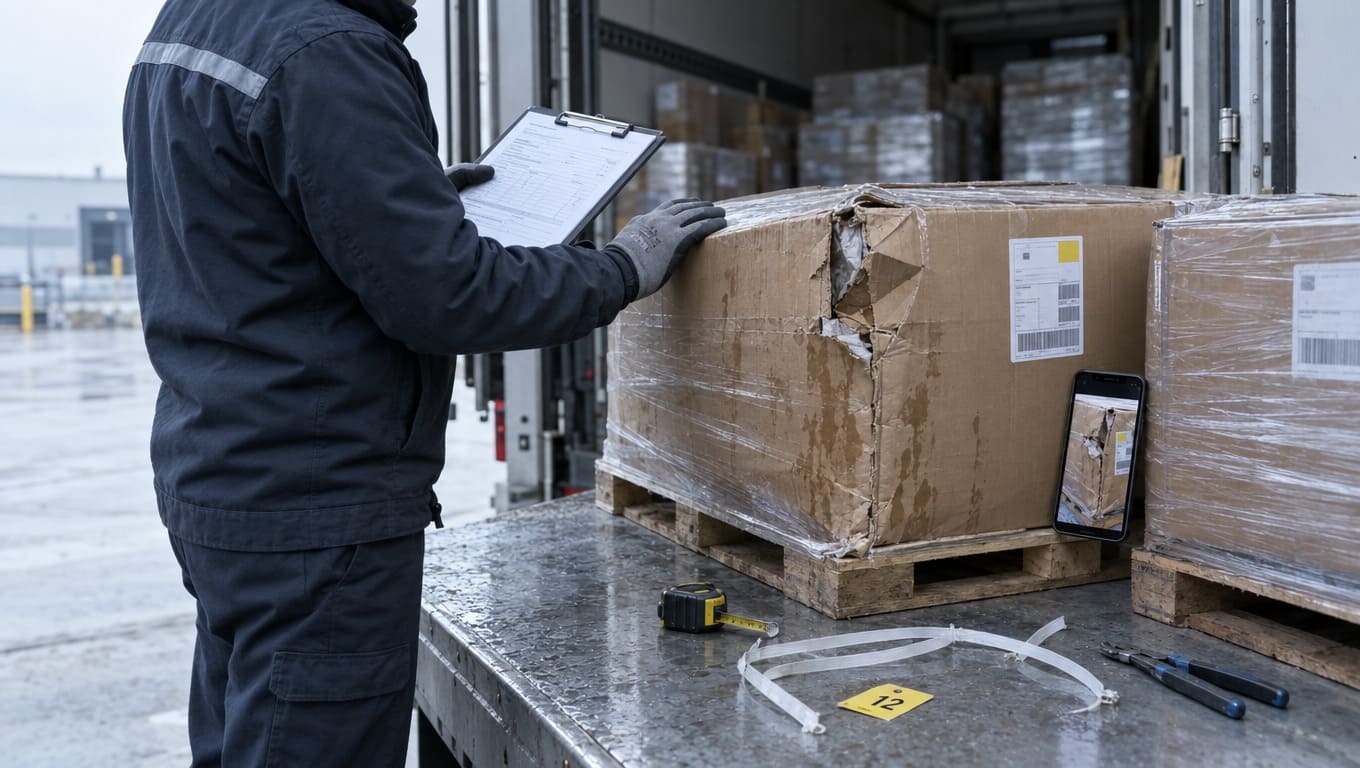
The surveyor records the condition of the packaging, markings, available temperature indicators, logger readings, and other significant circumstances. If signs of a violation are found, it is important to document them before the cargo is moved or subjected to further processing.
Special attention is paid to time. A photograph of the temperature without specifying the measurement moment has limited value. In proper documentation, it is necessary to ensure the ability to link a reading to a specific batch and a specific stage of the operation.
Air temperature and product temperature are not the same thing
This is one of the most important features of temperature control. The air temperature in the cargo space can change faster than the temperature inside the product itself, especially if the cargo has a significant mass and is in heat-insulating packaging.
The reverse situation is also possible. After the normal regime is restored, the air may already have an acceptable temperature, while the product inside the packaging still retains the effects of previous exposure.
Therefore, the value of a single air temperature measurement cannot automatically be equated to the temperature of the entire cargo. The measurement methodology must correspond to the task at hand and the requirements for specific products.
The location of the sensor matters
The temperature inside the cargo space is not the same at all points. It can be affected by the location of the evaporator, air circulation, proximity to doors, stowage density, and packaging features.
If a sensor is located directly near a cooling source, its readings may differ from the temperature in another area of the space. Therefore, during analysis, it is necessary to know where the sensor was located.
Data from a single logger should be interpreted especially carefully if its location cannot be established. In this case, a specialist can confirm a certain value at a specific point, but a conclusion about the temperature of the entire batch should be drawn taking into account the limitations of the method.
How the reliability of measuring equipment is checked
Any measuring instrument is a data source, but its readings should not be taken as absolute truth out of context. Questions may arise regarding the calibration, technical condition, settings, and operating conditions of the logger.
The surveyor studies the available information about the device and compares readings with other sources. If a significant deviation is recorded on one instrument, while several independent sources show a different picture, there is a need for additional analysis.
This does not mean that one instrument is automatically considered wrong. It is required to establish which source relates to a specific control point and how reliable the measurement conditions are.
What to do with contradictory data
In real investigations, data often do not match. One logger shows a temperature increase, the refrigeration unit display continues to show a normal value, and the carrier’s records do not contain information about a failure.
Such a situation should not be resolved by choosing the most convenient reading. It is necessary to determine what exactly each source measured, where it was located, and what time period it covered.
The surveyor compares all available materials. Sometimes it is precisely the discrepancy between sources that helps discover a problem, for example, incorrect sensor placement or a malfunction of a separate monitoring element.
A temperature violation does not equal automatic cargo spoilage
This is a fundamentally important distinction. A temperature falling outside the set range is a fact of a set regime violation, but the issue of actual damage requires a separate assessment.
The consequences depend on the characteristics of the specific product, the magnitude and duration of the deviation, the condition of the products, and the manufacturer’s requirements. For some goods, a short-term deviation may have limited significance, while for others, even a small change in conditions can be critical.
Therefore, a surveyor should avoid categorical conclusions about a product’s unsuitability without sufficient grounds. Recording a temperature violation and assessing its consequences are related but not identical tasks.
Temperature is only one coordinate of the problem. The second is time. It is the combination of these two parameters that makes it possible to understand the scale of the impact.
For example, exceeding the permissible value for a few minutes and the same excess for several hours cannot be considered equally. In the first case, we may be talking about a short-term deviation, in the second – about a significant regime violation.
Therefore, when preparing a report, it is important to reflect not only the maximum deviation, but also its duration. A temperature graph in this regard is often more informative than a single figure.
Typical mistakes when investigating a temperature incident
Mistakes can occur even before the surveyor appears on-site. For example, if the temperature log was not preserved, there is no data on the loading time, or the initial cargo temperature was not recorded, some information can no longer be recovered.
Another common flaw is focusing exclusively on the current temperature. Such an approach ignores the entire history of transportation and can lead to an erroneous conclusion about the healthy state of the cold chain.
The following situations become especially problematic:
- lack of initial temperature regime requirements;
- exact time of events is unknown;
- logger data is not saved;
- sensor is installed without regard to the control methodology;
- readings from a single instrument are accepted without comparison with other sources;
- cargo condition before transportation is not recorded;
- time of opening and closing doors is not reflected;
- assumed cause of the violation is presented as an established fact;
- the fact of temperature falling outside the range is automatically interpreted as proven cargo spoilage.
Each of these mistakes reduces the evidentiary value of the investigation. Therefore, a temperature survey requires not only equipment but also a consistent methodology.
How a survey helps in claims work
When a dispute arises, each party may have its own version of what happened. The carrier may point to the cargo’s condition upon acceptance, the supplier to the correctness of shipment, and the consignee to temperature readings upon unloading.
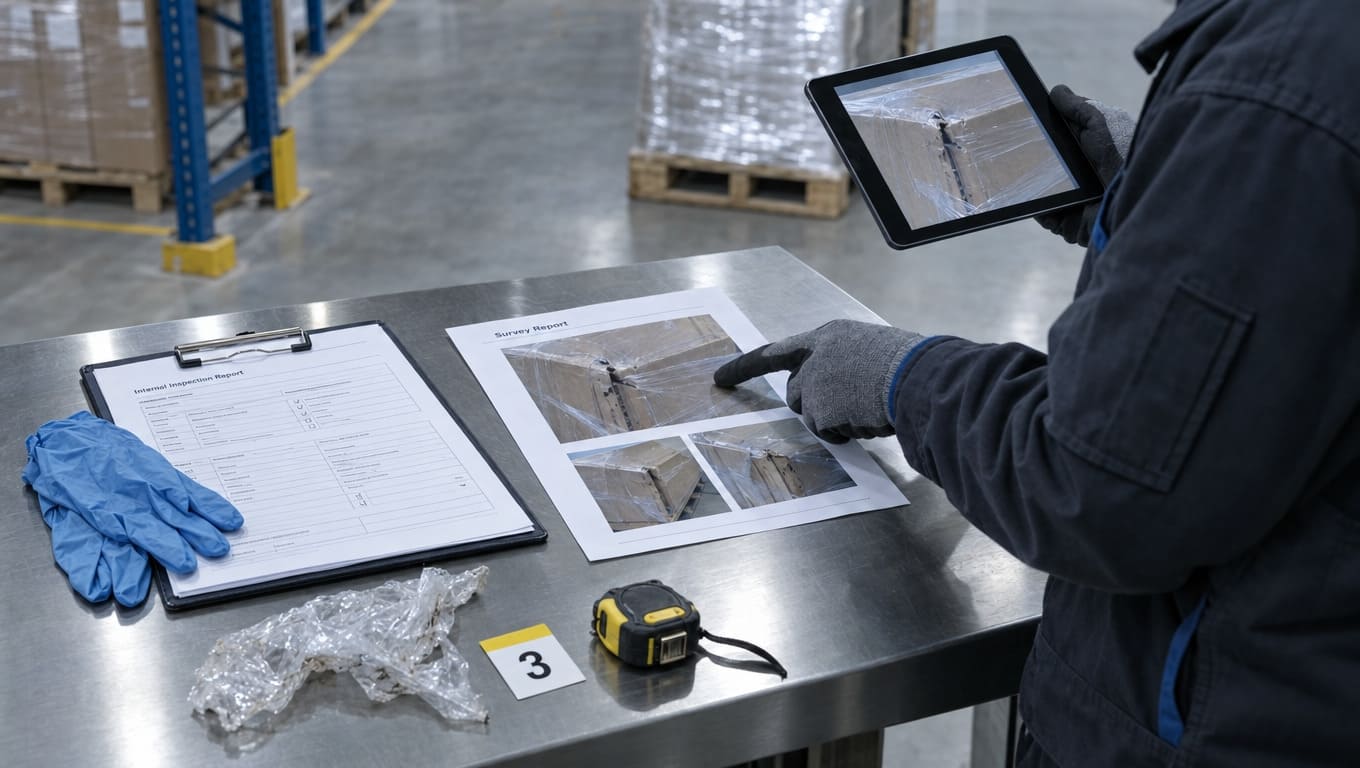
Independent documentation allows replacing some assumptions with concrete data. A report can show cargo condition, temperature readings, timestamps, documents, and circumstances of the operation.
This does not automatically guarantee a positive outcome for a claim. But a high-quality evidence base significantly increases the ability to objectively sort out the situation and determine what additional checks are needed.
LVS Global provides surveying services in international logistics, including inspection control of cargo, checking its condition and compliance with declared characteristics, controlling quantity and quality, as well as documenting actual circumstances. If a suspicion of a cold chain break has arisen in your logistics chain, or if it is necessary to arrange independent monitoring of temperature-sensitive cargo in advance, please contact us. Our specialists will help determine the required scope of the inspection, record the cargo’s condition and available temperature data, and prepare a documented inspection result.