In production, there is a moment that often seems almost insignificant: the first part has already been manufactured, the equipment is set up, the technologist says the process is running, and the supplier is ready to move to serial production. At this stage, it is easy to decide that the main issues are already behind and all that is left is to wait for the finished batch. But this is exactly where one of the most expensive production mistakes can hide: if the first article has a systemic deviation, it can repeat tens, hundreds, and thousands of times.
Serial defects rarely occur suddenly when a large batch of products ends up in the warehouse. In most cases, their cause appears much earlier – during technology development, equipment setup, material selection, tooling manufacturing, or technical documentation interpretation. The only problem is that without a special check, it can remain unnoticed until production is scaled up. First Article Inspection, or FAI, is designed exactly to detect such deviations at a time when they are still relatively easy to fix.
What is FAI and why it is needed
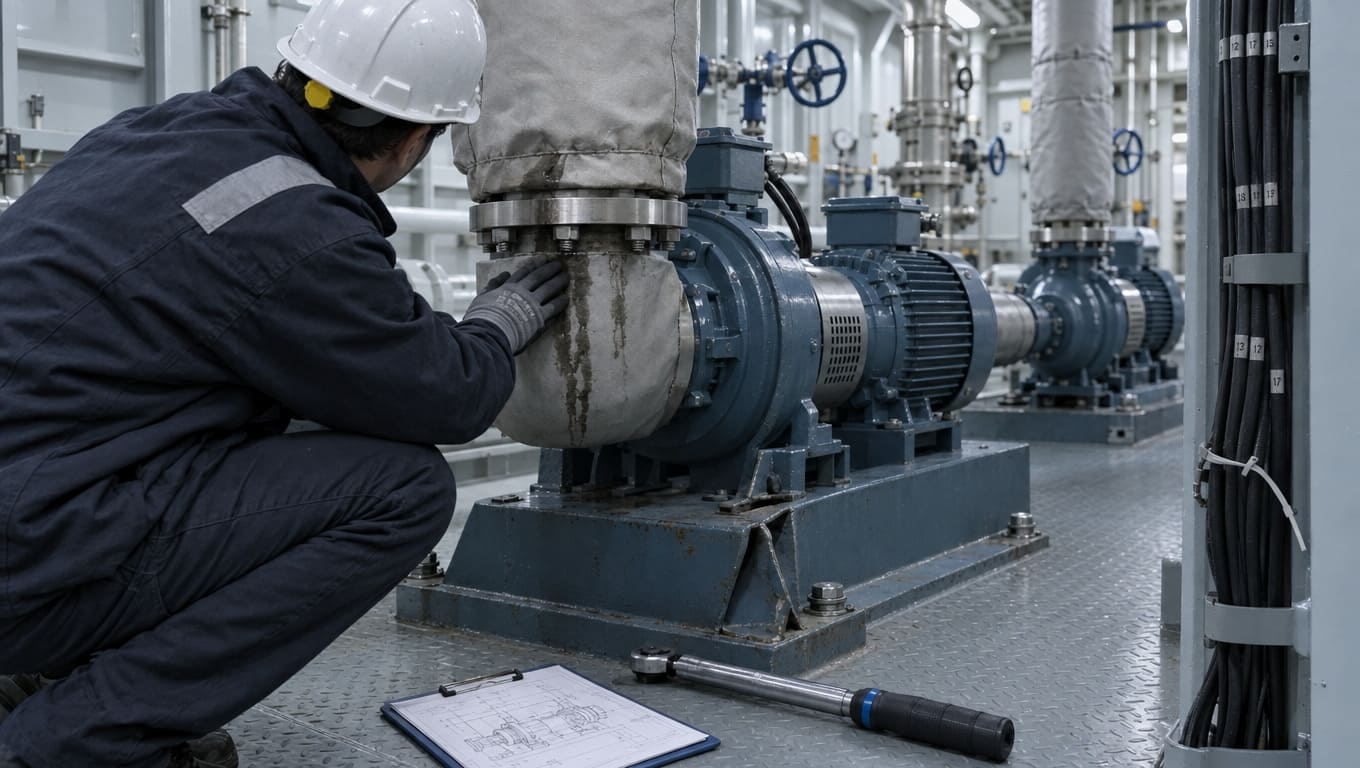
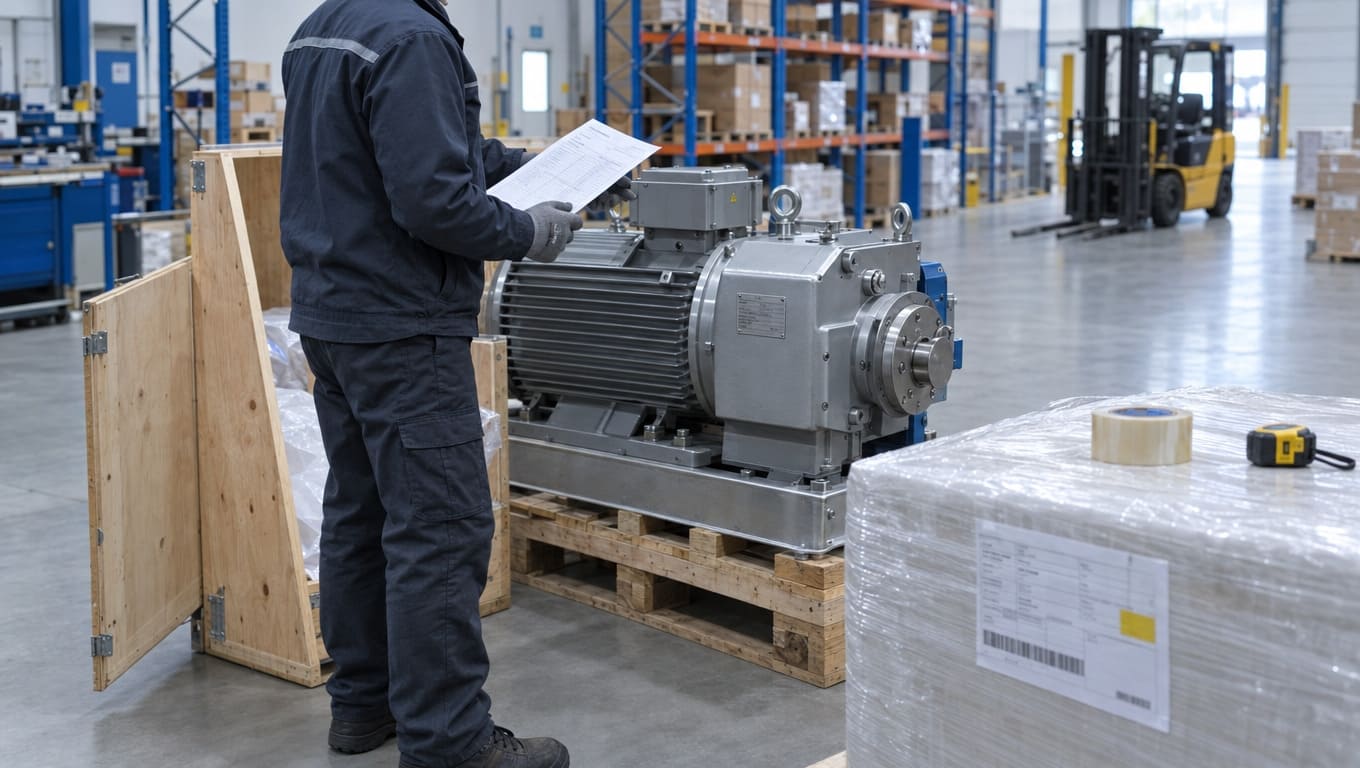
First article inspection is a check of a manufactured sample or an agreed trial batch for compliance with established technical, quality, and contractual requirements. Depending on the nature of the products, geometric parameters, materials, functional characteristics, processing quality, completeness, marking, and other indicators can be checked. The main difference between FAI and regular finished product control is that its task is not limited to the question “does this part meet the requirements”.
In essence, FAI should help answer a more important question: is the production process capable of producing goods that meet the client’s requirements before the enterprise starts producing them in significant volumes. This is a fundamental difference. One can obtain a single good part through manual adjustment, additional processing, or particularly careful control by a specialist, but this does not mean that the entire process is stable and capable of reproducing such a result in a series.
Therefore, first article inspection sits at the intersection of product control and production risk control. It allows seeing not only a specific deviation, but also the possible connection of this deviation with the manufacturing technology. The earlier such a connection is established, the smaller the potential scale of consequences.
In practice, FAI is particularly valuable where the cost of an error is high, and production is complex, multi-stage, or remote from the client. The LVS Global group of companies lists first article inspection among its specialized inspection services and describes it as checking a trial batch of products to confirm compliance with quality standards and technical requirements.
When first article inspection is needed
The most obvious situation is the launch of a completely new product. When a product has not been manufactured before, the manufacturer does not yet have accumulated statistics confirming the stability of the technological process. Even if the design documentation looks flawless, real production can reveal problems that were not visible at the design stage.
However, limiting FAI only to the launch of new products would be a mistake. A similar risk appears when production is moved to another site, a supplier is changed, equipment or tooling is replaced, the technological routing is adjusted, or new materials are used. In each such case, at least one element of the system that is supposed to ensure the production of a compliant article changes.
Special attention is required in situations where a product is custom-made or has a high cost. If a batch consists of several thousand standard components, fixing the process after discovering a problem is already expensive. But if we are talking about large-sized equipment, a complex technical assembly, or an expensive item, the cost of a single deviation can be significantly higher, and reworking it after production is complete is practically impossible.
FAI also becomes a reasonable control measure after a long break in production. During the downtime, employees, equipment, material suppliers, machine software, or technological instructions could have changed. Formally, the product remained the same, but the actual conditions of its manufacture are different.
Before deciding to conduct an FAI, it is useful to assess not only the novelty of the product, but also the likelihood that a process change can affect quality.
How FAI differs from regular quality control
Sometimes a question arises: if an enterprise already has a technical control department, why is a separate first article inspection needed? The logic of such a question is understandable, but it is based on mixing several different tasks. Regular quality control can confirm the compliance of manufactured products, whereas FAI focuses on confirming that the process and the result of the first article meet the agreed requirements prior to full-scale serial production.
Regular control can be organized as a continuous or selective check of an already running production. FAI, on the contrary, has a pronounced preventive function. It should help identify problems at the start, when the technological process can still be changed without a massive amount of rework.
In addition, the initial technical baseline is of great importance during FAI. The check is not conducted “by eye” or based on a general idea of what the product should be like. The inspector compares the actual characteristics of the sample with specific requirements: drawings, specifications, technical assignments, agreed samples, and other documents defining compliance criteria.
This is especially important in international deliveries. A manufacturer may consider a product to be of high quality because it meets their internal standards, but the client evaluates it according to a different specification or contract terms. In international practice, an independent inspection helps compare the actual product condition with the applicable set of requirements, including contract conditions, standards, and final market requirements.
What exactly is checked during FAI
The content of an inspection cannot be defined identically for all products. Checking an industrial part, electrical equipment, a construction element, and a finished consumer good will be structured differently. Therefore, a competent FAI begins with determining which characteristics are truly critical for the product’s purpose and which documents establish the allowable values.
Depending on the product and agreed requirements, an FAI may cover:
- compliance of geometric dimensions and tolerances with technical documentation;
- compliance of applied materials with established requirements;
- functional and operational characteristics;
- quality of the surface, processing, welding, coating, or joints;
- product compliance with the approved sample or standard;
- completeness and correctness of assembly;
- correctness of marking and identification;
- availability of necessary certificates, test reports, and other supporting documentation;
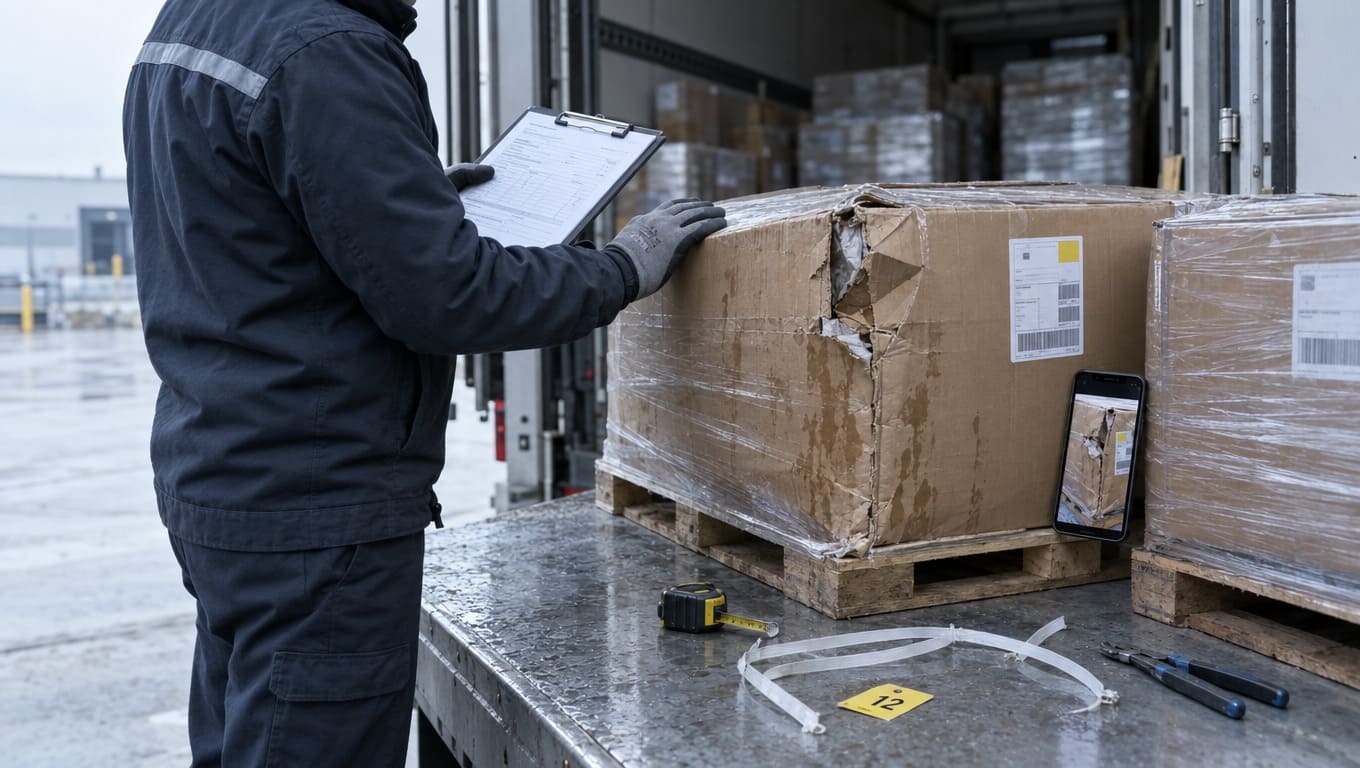
- compliance of packaging and product preparation for further transportation, if this is within the scope of control;
- results of stipulated technical tests and measurements.
This list should not be perceived as a universal program for any project. On the contrary, the value of FAI lies in the ability to tailor a check for a specific object. For one product, several dimensions will be critical, for another – the chemical composition of the material, for a third – tightness, electrical parameters, or joint quality.
Connection between FAI and documentation
An inspector can take dozens of measurements, take photographs, and describe the product condition in detail, but without up-to-date technical documentation, the inspection results will have limited value. It is impossible to objectively determine compliance if it is unclear exactly which drawing version to follow. A situation where the manufacturer and the client have different revisions of the same document is particularly dangerous.
The problem of documentation relevance is often underestimated. During product development, drawings and specifications change, requirements are clarified, new software versions appear, and materials and tolerances are adjusted. If production continues to use an old revision, one can get a perfectly manufactured product that nevertheless does not meet the current requirements.
This is precisely why it is important to determine the reference version of technical documentation before conducting an FAI. The inspection should be conducted against the requirements that are actually in effect for the specific order, and not against documents that accidentally ended up with the manufacturer.
For international projects, the task becomes even more difficult. A contract, the client’s technical assignment, drawings, the manufacturer’s specifications, national norms, and industry standards can be simultaneously used in a single chain. LVS Global notes that during international inspections it is necessary to consider not only the actual product condition, but also contract terms, destination country requirements, manufacturing country standards, and applicable international or industry norms.
The first article must be representative
The name FAI can create a false impression that it is enough to take any first part coming out of production. In reality, it is important to understand the conditions under which it was manufactured. If a sample was additionally fitted manually, assembled by the most experienced specialist, or manufactured on different equipment, it may not reflect the capabilities of the real serial process.
Imagine a production facility where a machine, after several trial operations, was additionally adjusted right before manufacturing the test sample. The first part turned out perfect, but then the equipment returns to its initial settings, and the serial batch begins to gradually drift out of tolerance. Formally, the FAI has been passed, but its main task has not been fulfilled: it did not confirm the stability of the real process.
Therefore, when planning an FAI, it is important to understand the origin of the inspected product. You must consider the equipment, materials, tooling, technological sequence, and personnel qualifications used. The more the manufacturing conditions of a sample differ from the conditions of future serial production, the lower the value of such control.
An FAI should not turn into a demonstration of a “perfect part” specifically manufactured for the inspector. Its meaning lies in verifying the normal production process, which will then be used to manufacture the entire batch.
What problems can be found before starting the series
The most valuable FAI results are related not to obvious defects, but to those deviations that are not yet perceived as a serious problem. For example, a dimension may be inside the tolerance, but be dangerously close to its boundary. If the technological process has significant variance, a part of the future batch may already fall outside the established limit.
At the first article stage, one can identify, in particular, the following types of problems:
- systematic shift of geometric parameters;
- use of material or components not meeting the specification;
- non-compliance of the actual technology with the approved process;
- errors in marking, identification, or completeness;
- instability of parameters located near the tolerance boundary;
- insufficient repeatability of individual production operations;
- non-compliance of functional characteristics with target values;
- errors in assembly, jointing, or component installation.
It is important that an identified defect is only the beginning of the work. If an inspection shows a non-compliance, it is necessary to establish its cause and determine whether it affects only the specific sample or the entire production process. It is exactly at this stage that FAI turns from a simple check into a quality management tool.
Who should conduct FAI
The manufacturer’s internal quality department has a major advantage: its employees know the equipment and technology well. They can quickly link a discovered deviation to a specific operation and propose a corrective action. However, when working with a supplier, there is an obvious limitation to such control – the client receives information from a party that is simultaneously responsible for production.
This does not mean that the manufacturer’s internal control is not needed. On the contrary, it is a necessary part of a normal quality system. But in critical deliveries, a client may need independent confirmation of the results, especially if production is located in another country or physically remote from their own team.
An independent inspector should not replace the manufacturer or designer. Their task lies in objectively checking the agreed parameters, recording the actual results, and identifying non-compliances. Such an approach is particularly useful when parties must make a decision about launching serial production based on a unified evidence base.
For international deliveries, independent control acquires additional value due to distance. A client cannot always send their own engineer to the factory, monitor every production stage, or be present during the manufacturing of the first sample. In such a situation, an independent inspection allows obtaining factual information directly from the production site.
FAI when working with a foreign supplier
A remote supplier creates a special situation. Before launching production, the client can study the company’s presentation, certificates, facility photographs, and product samples. But all this information describes the supplier’s capabilities, and does not necessarily confirm the compliance of a specific product with a specific order.
It is especially risky to draw conclusions based solely on previous experience. A supplier may indeed have successfully produced similar goods, however, a change in design, material, equipment, or technical requirements can alter the result. A manufacturer’s reputation reduces certain risks, but does not eliminate the need for control.
In international procurement, an error discovered after a batch is dispatched costs significantly more. It is necessary to organize returns or rework, resolve issues with transportation, customs clearance, delivery times, and the parties’ liability. Sometimes a defect cannot be fixed on the client’s side without substantial costs.
Therefore, an FAI prior to serial production allows moving the decision-making point to an earlier stage. Instead of first producing and dispatching an entire batch, the client gets the opportunity to assess product compliance while it is still on the manufacturer’s territory.
What happens after a non-compliance is found
The most incorrect reaction to an FAI result is trying to simply replace the defective product and continue production. If a deviation is related to a systemic cause, replacing one sample will solve nothing. The next product will be manufactured using the same technology and will highly likely repeat the problem.
Proper logic involves finding out the cause. It is necessary to determine whether the deviation is related to the material, equipment, setup, tooling, program, personnel qualifications, operation sequence, or an error in the source documentation. After this, it is necessary to verify whether the corrective action has truly eliminated the problem.
Sometimes this requires manufacturing a new sample and conducting a re-check. This may be perceived as a delay, especially when the supplier is interested in moving to mass production as quickly as possible. But a few days spent fixing the process are incomparable to the potential costs of sorting or replacing a large batch.
Ultimately, FAI must answer not the question “did we find a defect”, but the question “can production be safely scaled up”. If the answer is negative, this is not a failure of the inspection. On the contrary, this is exactly when it performs its main function.
How to prepare for FAI
A high-quality inspection begins long before the inspector’s visit to the enterprise. If check criteria are not defined in advance, parties may have different understandings of what exactly is considered a compliant product. The manufacturer will rely on internal documentation, and the client – on their own technical assignment, and the difference will be discovered right during acceptance.
Therefore, the preparatory stage should be as specific as possible. Before conducting an FAI, it is advisable for the client to prepare the following elements in advance:
- the current version of drawings and technical specifications;
- requirements for materials and components;
- agreed samples or standards, if they are used;
- a list of critical parameters and allowable deviations;
- requirements for functional tests;
- requirements for marking and completeness;
- procedure for documenting inspection results;
- criteria for making a decision to launch serial production;
- course of action when non-compliances are identified.
Such an approach makes the inspection predictable for all participants. The manufacturer understands the criteria by which their work will be evaluated, and the client receives results that can be compared with pre-established requirements. As a result, FAI ceases to be a one-time “just in case” check and becomes part of a managed procurement and production process.
Typical mistakes when organizing FAI
- checking against an outdated revision of a drawing or specification;
- lack of pre-agreed acceptance criteria;
- conducting control based only on visual signs;
- failure to document the results of individual measurements;
- making a decision to launch a series based solely on the supplier’s words;
- checking a sample manufactured under conditions different from the serial process;
- ignoring deviations located right near the tolerance boundary;
- lack of re-checking after introducing technological changes.
What the client gets based on FAI results
A well-organized inspection gives the client more than just a “complies” or “does not comply” answer. It forms a basis for making a decision about further production. If deviations are found, the client understands what exactly needs to be fixed, and if requirements are met – receives confirmation to proceed to the next stage.
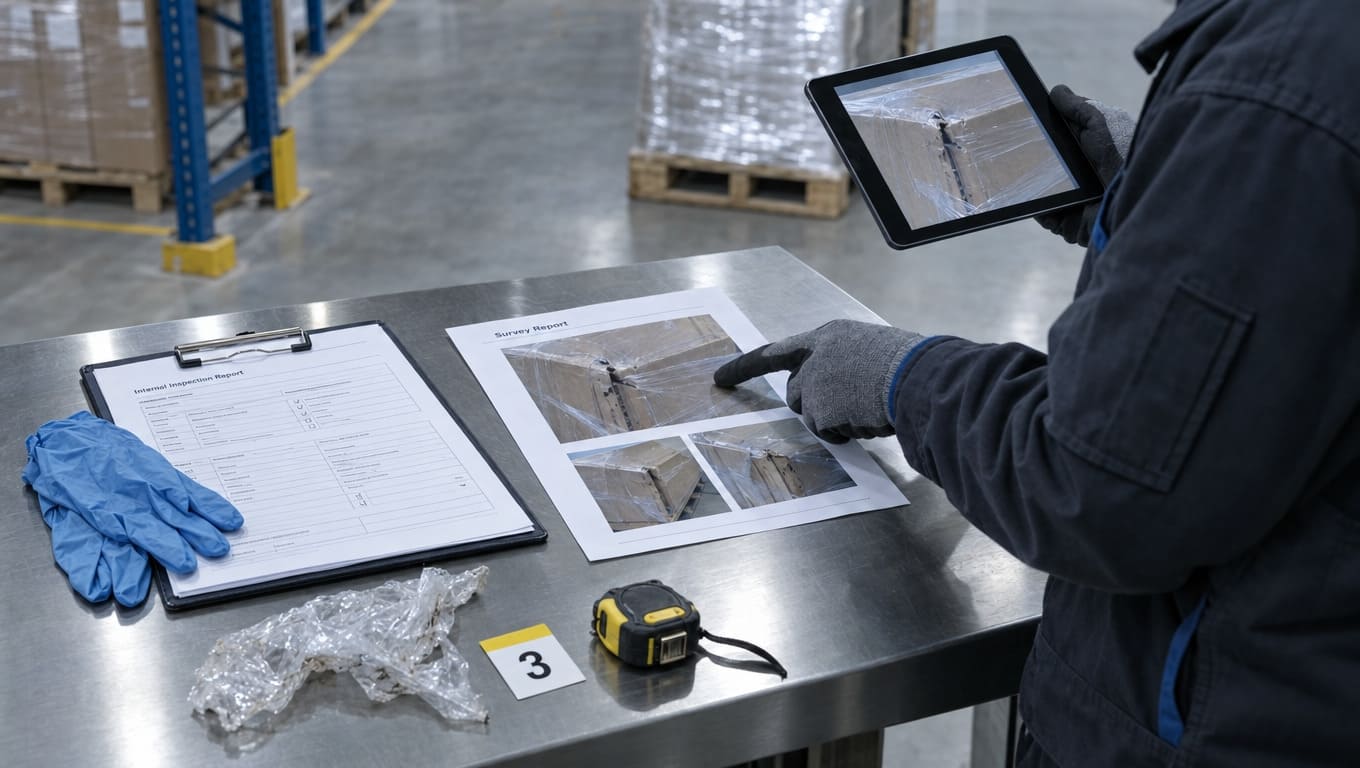
The objectivity of the result is especially valuable. Photographs, measurements, sample condition description, and comparison with technical requirements allow discussing a problem in the language of facts. This significantly reduces the likelihood that a dispute between a client and a supplier will be built exclusively on different subjective assessments.
In addition, FAI results can be used as a starting point for subsequent control. Upon discovering a deviation, one can determine parameters that require increased attention during serial production. Thus, the first inspection helps not only to resolve the launch issue, but also to form a more accurate strategy for further control.
The LVS Global group of companies provides First Article Inspection services, and also conducts other types of inspections, including product quality checking, supplier audits, pre-shipment product inspection, and container loading control. We work according to criteria and technical documentation agreed with the client, recording the actual product condition and identified deviations. Depending on the task, an FAI can be supplemented by subsequent finished batch control or pre-shipment inspection.