After an unexpected incident, the natural desire of the transport participants is to restore movement as quickly as possible and minimize delays. For a business, transport downtime means additional costs, disruption of delivery deadlines, and possible problems with clients. However, rushing to resume transportation without assessing the condition of the cargo can lead to more serious consequences. If the products have already been damaged, further movement may increase the scale of the loss and complicate the subsequent investigation.
After an emergency stop, the conditions in which the cargo is located change. It may shift inside the vehicle, be subjected to additional loads during evacuation or reloading, or lose part of the protective properties of its packaging. Even if the carrier has eliminated the technical problem and the transport is ready to move again, the condition of the cargo itself must be assessed separately. The operability of a truck, container, or other means of transport is not proof that the goods have remained intact.
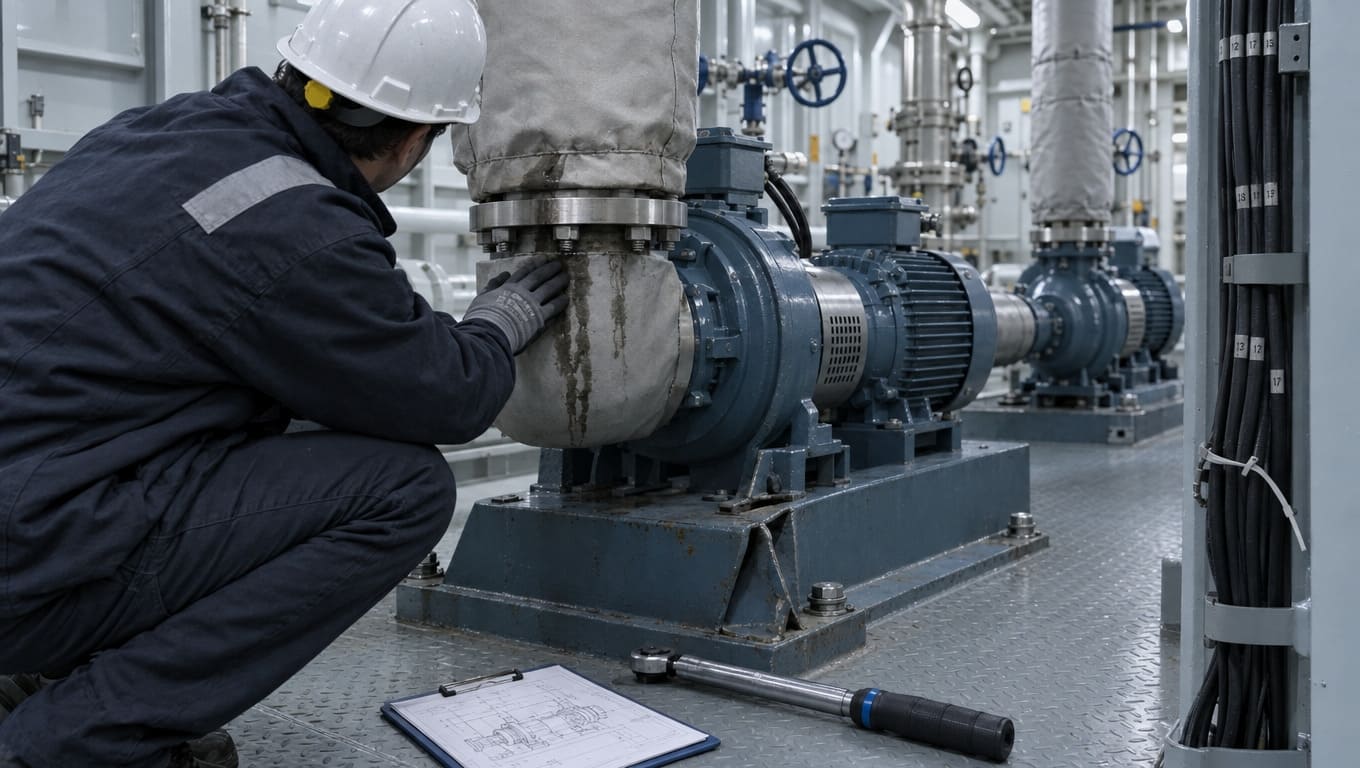
One of the main problems is the presence of hidden damage. Many defects cannot be detected during a superficial inspection. For example, equipment may retain its appearance but suffer internal damage to fastenings, electronic components, or operating mechanisms.
Continuing transportation without an inspection creates several risks:
- Increase in the scale of damage. If certain cargo elements have already been weakened or shifted after the emergency impact, further transportation may lead to their destruction.
- Loss of evidence. After additional movements, reloading, or opening of the packaging, it becomes more difficult to determine the original nature of the damage.
- Incorrect allocation of responsibility. If the cargo continues moving without its condition being documented after the incident, transport participants may interpret the cause of the loss differently.
- Higher restoration costs. A minor problem identified immediately after the incident may require much more complex repairs after the route is completed.
- Risk of delivering unsuitable cargo to the consignee. If the damage is discovered only after arrival, the company may face customer claims and additional expenses.
Inspection is especially important in international transportation, where days or even weeks may pass between the emergency event and final delivery. During that time, the cargo may pass through several parties responsible for it, and the original circumstances of the incident may be forgotten or documented insufficiently.
In addition, after an emergency stop, actions are often taken that may themselves affect the condition of the products. For example, the cargo may be moved to gain access to the vehicle, reloaded into another truck body, or temporarily placed on a site. Each such action must be taken into account in the subsequent analysis. That is why the inspection should be carried out as close as possible to the moment when the emergency occurred.
What Factors Are Evaluated During an Inspection After an Emergency Stop
An inspection after an emergency stop begins not only with checking the cargo itself. Specialists need to reconstruct the overall picture of what happened: under what circumstances the stop occurred, what impacts the cargo may have experienced, and what operations were carried out after the incident.
This approach makes it possible to evaluate damage not in isolation, but in connection with the actual transport conditions. For example, the same packaging deformation may have different causes: impact during the accident, improper securing, shifting during movement, or damage during reloading. That is why specialists analyze the combination of factors that may affect the condition of the products. The more information collected at the initial stage, the more accurately the possible causes of damage can be identified.
The following parameters are usually assessed during the inspection:
- Circumstances of the emergency stop. The cause of the incident, the time of the stop, the nature of the impact on the vehicle, and the possible loads experienced by the cargo are analyzed.
- Condition of the vehicle. Damage to the truck body, container, securing elements, and other parts that could have affected the condition of the products inside is checked.
- Nature of the external impact. The inspection assesses which mechanical or external factors may have affected the cargo: impact, sudden braking, overturning, vibration, or shifting.
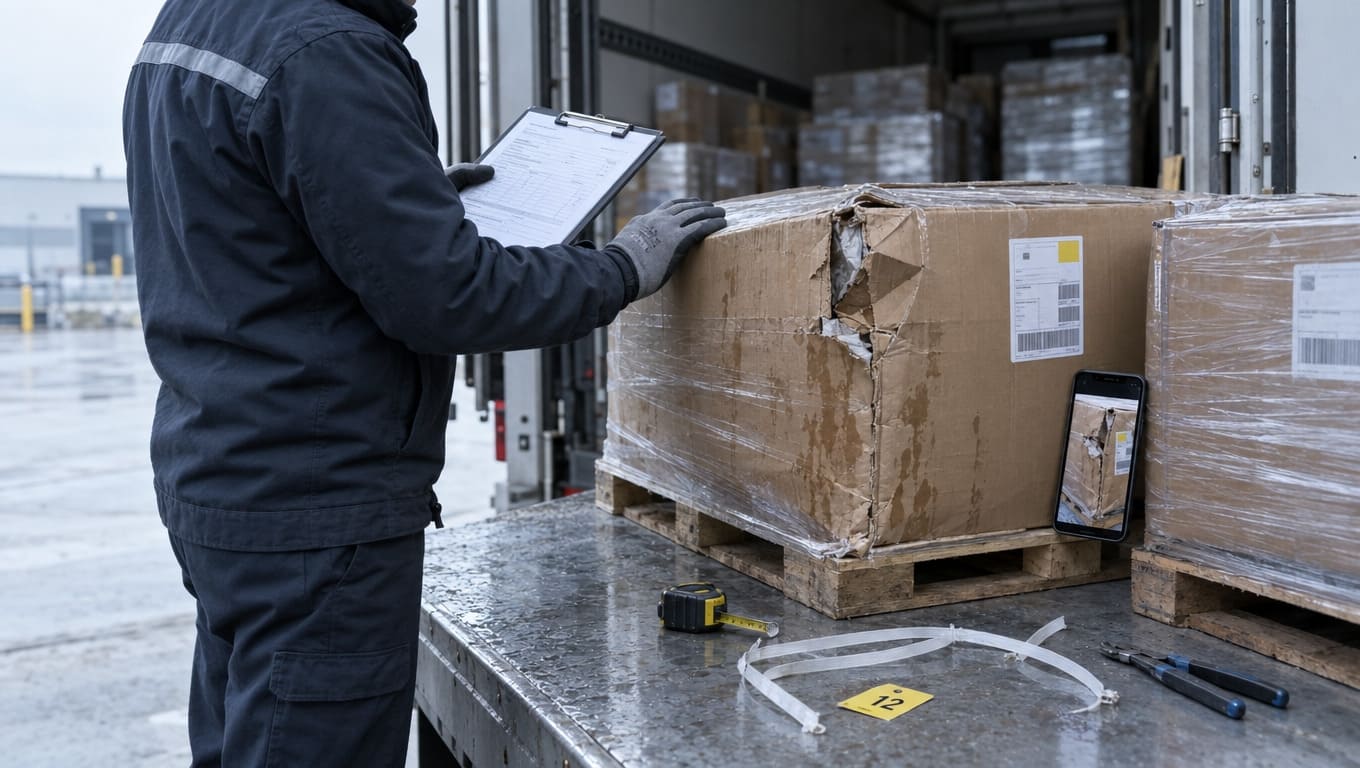
- Condition of the packaging. The integrity of boxes, pallets, protective structures, film, fastenings, and other elements ensuring cargo safety is checked.
- Positioning and securing of cargo units. Specialists assess whether the cargo placement remained safe or whether shifting occurred inside the vehicle.
- Presence of traces of damage. Deformations, tears, contamination, moisture traces, damage to protective coatings, and other signs of possible impact are recorded.
- Compliance of the actual condition with the documents. The number of packages, markings, cargo description, and other data are checked against the information stated in the accompanying documents.
At the same time, the inspection is not limited to searching for visible defects. The specialist’s main task is to determine the overall condition of the cargo and assess the likelihood of hidden problems. For example, the absence of damage to the outer packaging does not rule out internal fastening failures. Likewise, the presence of minor external deformations does not always mean the products have completely lost their usability.
How the Initial Cargo Inspection Is Carried Out After an Emergency Incident
The initial inspection after an emergency stop is one of the most important stages of the entire inspection process. The quality of further analysis and the ability to establish the causes of damage depend on how completely the situation is documented in the first hours after the incident. The main task of the initial inspection is not to immediately determine the final amount of damage. At this stage, specialists must preserve objective information about the condition of the cargo, the vehicle, and the circumstances in which the stop occurred.
The process usually begins with an analysis of the incident circumstances. It is necessary to establish when the stop occurred, how long the cargo remained stationary, what actions were taken after the event, and who had access to the products.
At this stage, information is collected about:
- the cause of the emergency stop;
- the time when the incident occurred;
- the location of the cargo after the stop;
- weather and external conditions;
- actions taken to eliminate the consequences;
- the parties who interacted with the cargo.
Such data helps reconstruct the sequence of events. For example, damage may have occurred directly at the moment of the incident, but it may also have arisen later during an attempt to move the cargo or carry out emergency reloading.
After the circumstances are analyzed, a visual assessment of the vehicle is carried out. The condition of the truck body, container, doors, securing systems, and other elements that could have affected cargo safety is checked. Special attention is paid to the zones where the highest loads may have occurred. Traces of vehicle deformation often help determine the direction of the impact and assess the probability of damage to the internal cargo units.
The next stage is the inspection of the cargo itself. Specialists examine the accessible surfaces of the packaging, the condition of the fastenings, the presence of shifts, and external signs of damage. It is important not to limit the inspection to a selective review. Even if some cargo units appear to be intact, other parts of the batch may have been affected. This is especially relevant when transporting large consignments, where the load may have been distributed unevenly.
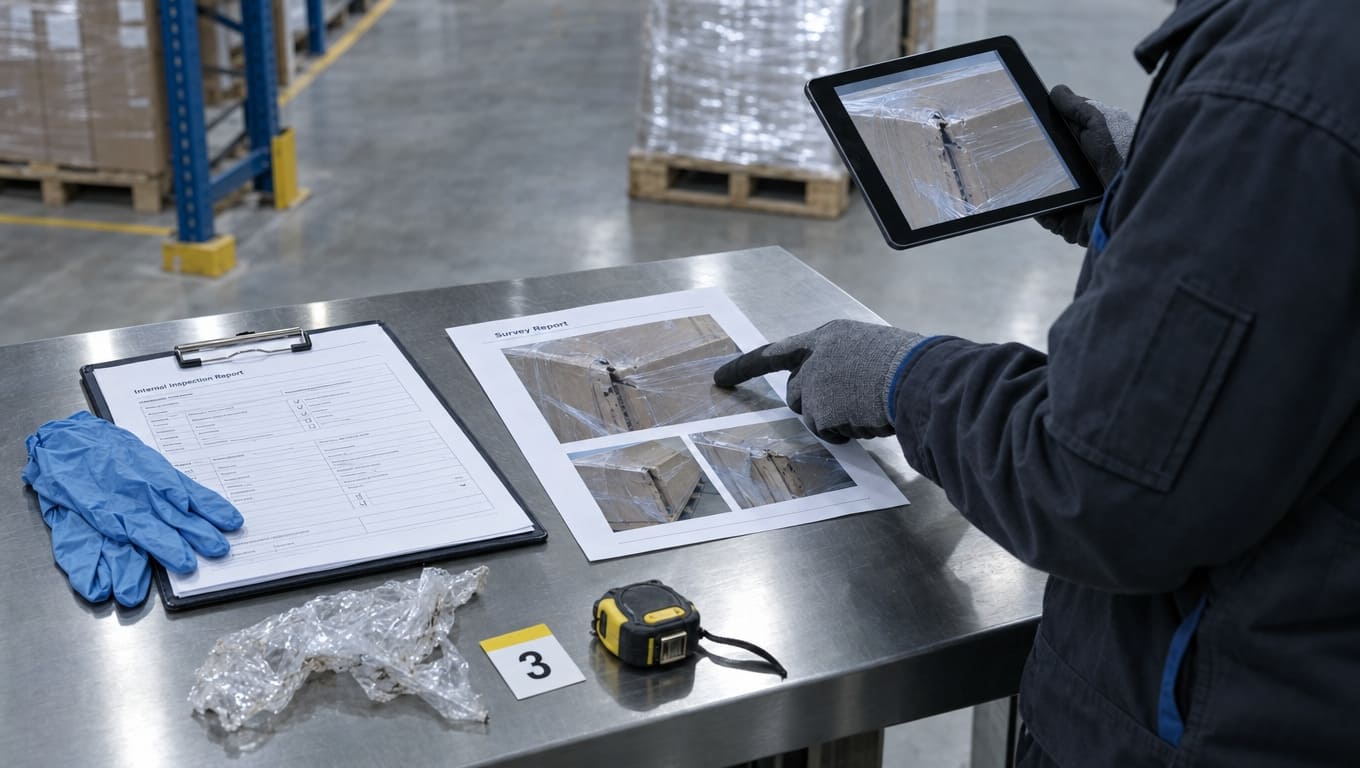
During the initial inspection, photo and video documentation is carried out. It helps preserve the original condition of the cargo and the vehicle before further operations begin.
The following are documented:
- the general view of the vehicle after the stop;
- the location of the cargo units;
- the condition of the packaging;
- the damaged areas;
- the securing elements;
- traces of external impact;
- markings and identification data.
Photographic materials are of great importance for further analysis. They help compare the condition of the cargo before and after certain actions and are also used in the preparation of expert reports and the review of insurance claims.
After the initial inspection is completed, specialists determine whether further procedures are necessary. In some cases, a visual assessment and documentary recording are sufficient. In other situations, a deeper examination with partial opening of the packaging or a technical inspection of the products is required.
Packaging Inspection After an Emergency Stop
Packaging is the first level of cargo protection, which is why its condition is one of the first things assessed after an emergency stop. However, specialists consider packaging not only as an outer protective layer, but also as a source of information about the nature of the impact on the cargo. Marks on the packaging can reveal a great deal about what happened. Deformations, tears, displacement of fastenings, or damage to protective elements help determine what loads the cargo experienced during the emergency.
At the same time, packaging integrity does not guarantee product safety. Modern packaging systems are capable of withstanding significant external impacts, but the internal elements of the goods may be damaged even without obvious external signs. Therefore, packaging inspection is always carried out together with the assessment of the cargo itself. The specialist analyzes the relationship between the condition of the outer protection and the possible consequences inside.
During packaging inspection, the following parameters are assessed:
- Integrity of the outer layer. The presence of tears, punctures, cracks, deformations, and other damage that could have reduced the level of protection is checked.
- Condition of internal securing elements. The integrity of pads, cushioning materials, spacers, and other components preventing product movement inside the packaging is assessed.
- Traces of cargo shifting. It is checked whether the position of the goods has changed compared to the original placement.
- Condition of fastening elements. Belts, straps, fastenings, and other securing systems that may have loosened or broken are analyzed.
- Presence of traces of external impact. Signs of impact, pressure, falling, or other mechanical loads are identified.
- Protection from the external environment. The inspection checks for damage that could have allowed moisture, contamination, or other external factors to enter the packaging.
Particular attention is paid to packaging after situations involving sudden changes in vehicle movement. During emergency braking or collision, the cargo may experience significant inertial loads, even if the vehicle itself appears only slightly damaged.
For example, a cargo unit may remain in place, while the internal fastenings may loosen. If transportation continues, this may lead to the shifting of components and damage to the products.
Another common problem is related to the partial loss of packaging’s protective properties. After an incident, the outer layer may retain its shape but develop microdamage that reduces its strength during further movement.
This is especially important when transporting:
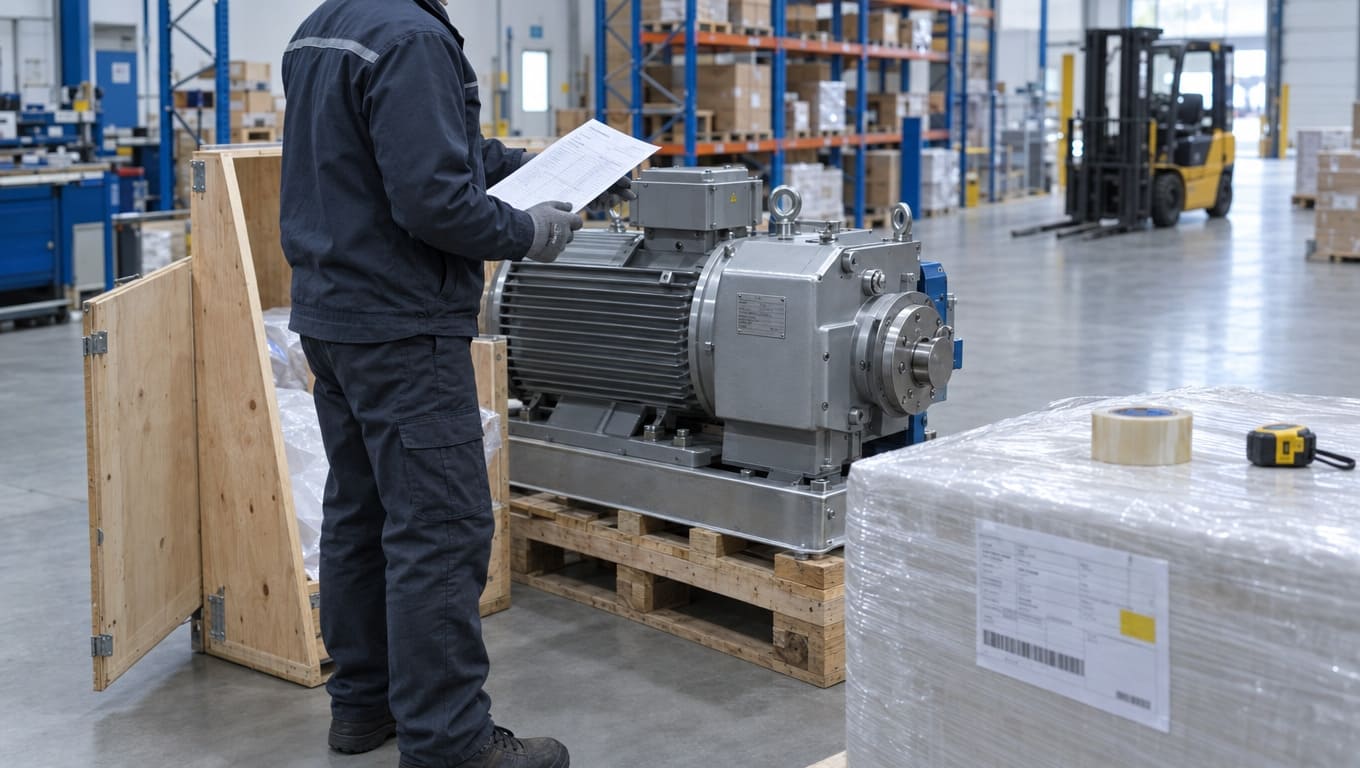
- equipment in wooden crates;
- fragile products;
- high-value cargo;
- goods sensitive to vibration;
- products requiring a strictly defined transport position.
After checking the packaging, specialists decide whether it can continue to perform its protective function. If the packaging no longer provides the required level of protection, further transportation without restoring it may lead to increased damage.
How Specialists Identify Hidden Damage
Hidden damage is one of the main reasons why inspection after an emergency stop requires a professional approach. A visual inspection makes it possible to detect only obvious problems, while a significant part of the defects may be located inside the equipment, packaging, or individual structural elements.
The special feature of such damage is that it may not appear immediately. The cargo may continue its journey, arrive at the consignee, and only after unpacking or commissioning reveal a malfunction. In such a situation, a difficult question arises: when exactly did the damage occur, and who is responsible for the consequences? The more time passes after the emergency event, the more difficult it becomes to answer this question without an objective expert assessment.
To identify hidden damage, specialists use a comprehensive approach. It includes visual analysis, checking the condition of individual elements, assessing the nature of the load, and comparing the obtained data with the circumstances of the incident.
The main methods of identifying hidden damage include:
- Detailed visual control. Specialists examine not only the outer surfaces, but also potentially vulnerable areas: joints, fastenings, protective elements, and points of possible impact.
- Assessment of the nature of deformations. The shape and location of the damage can help determine the direction of the impact and the likelihood of internal failures.
- Checking fastenings and securing. Weakened fastening elements may indicate significant loads during the emergency.
- Analysis of traces of impact. Dents, shifts, and packaging damage help assess what forces may have acted on the cargo.
- Checking the technical condition of the equipment. For complex products, analysis of individual components and functional elements may be required.
- Comparison of the damage with the circumstances of the incident. Specialists assess whether the detected defect corresponds to the described emergency situation.
- Additional examination of individual parts of the cargo. In some cases, partial opening of the packaging or a deeper technical assessment is required.
The inspector’s task is not to automatically classify the cargo as damaged or undamaged. The main purpose is to determine the actual condition of the products and the level of risk associated with further use or transportation.
Determining Whether Transportation Can Continue
After the initial inspection and assessment of the cargo condition are completed, the main question arises for the cargo owner, the carrier, and the other parties in the chain: can the transportation continue, or should additional measures be taken?
This decision cannot be made based only on a superficial impression. The cargo may appear suitable for further movement, but hidden damage or weakened fastening elements may lead to new problems already during the next stage of the route.
When determining whether transportation can continue, specialists take into account not only the presence of damage, but also its nature, scale, and impact on cargo safety. The same type of defect may have different significance depending on the product category.
For example, a slight deformation of the packaging may not pose a serious threat for one type of goods. For highly precise equipment or products sensitive to mechanical impact, the same situation may require a deeper inspection.
The decision on further movement is usually based on several criteria:
- Condition of the cargo itself. The inspection assesses whether there is damage that may affect the functionality, safety, or commercial value of the products.
- Condition of the packaging and securing. It is checked whether the packaging retains its protective properties and whether it is capable of ensuring product safety during the continuation of the route.
- Nature of the emergency impact. Specialists analyze how strong the load was and whether it could have affected the internal elements of the cargo.
- Manufacturer’s requirements. For some categories of products, there are clear rules regarding permissible damage and the conditions for further transportation.
- Conditions of the further route. The inspection assesses what additional loads the cargo will face: transportation duration, number of reloadings, type of transport, and environmental conditions.
Depending on the inspection results, different further actions are possible:
- In some cases, the cargo may continue transportation after additional securing or reinforcement of the packaging. For example, if specialists identify the weakening of certain fastening elements, but the products themselves remain in proper condition, it is enough to eliminate the detected risk.
- In other situations, reloading is required. If the vehicle is damaged, safety conditions have been violated, or the cargo is in an unstable position, further movement becomes unreasonable without transferring the products to another vehicle.
- It is also possible that repair or replacement of the packaging is necessary. This is especially relevant if the outer protection no longer performs its function and there is a risk of further damage during transportation.
- In some cases, specialists may recommend temporarily suspending further movement until an additional expert examination is carried out. Such a decision helps avoid greater damage and preserves the possibility of an objective investigation.
Documenting Inspection Results
After an emergency interruption of transportation, one of the key tasks is not only to assess the cargo condition, but also to properly document the findings. The documents prepared based on the inspection results become the foundation for decision-making and may be used in further interaction between transport participants.
Without documentary recording, even a high-quality inspection may have limited value. Over time, part of the information is lost, the cargo condition changes, and the incident participants may describe the circumstances of the problem differently.
An expert report makes it possible to preserve an objective picture of the situation at a specific point in time. It shows the condition of the cargo after the emergency event and which factors may have affected its safety.
Documenting inspection results usually includes several elements:
- Cargo inspection report. It records the date and place of the inspection, the participants in the inspection, the description of the product condition, and the identified features.
- Photo and video materials. They help confirm the appearance of the cargo, packaging, vehicle, and damaged areas.
- Description of the nature of the damage. Specialists indicate which defects were found, where they are located, and what consequences they may have.
- Information about the circumstances of the incident. The report includes data on the cause of the stop, possible impacts, and the actions taken after the accident.
- Assessment of suitability for further transportation. The report indicates whether the route can continue without additional measures or whether intervention is required.
- Recommendations for further actions. The document may contain proposals regarding reloading, packaging repair, additional protection, or an extended expert examination.
Such documents are particularly important in insurance cases. The insurance company must understand when and under what circumstances the loss occurred, what measures were taken after the incident, and how justified the submitted claims are.
In addition, the report helps distribute responsibility among transport participants. In international logistics, one emergency may affect the interests of several parties: the cargo owner, the carrier, the freight forwarder, the warehouse operator, and the insurance company.
If there is no independent recording of the cargo condition after the incident, each party may interpret the situation in its own favor. For example, the carrier may claim that the damage existed before the cargo was handed over, while the cargo owner may argue that it arose during transportation. A documented report makes it possible to move from assumptions to factual analysis. This significantly simplifies negotiations and reduces the likelihood of lengthy disputes.
Typical Mistakes Companies Make After an Emergency Stop
After an emergency incident, companies often try to restore cargo movement as quickly as possible. This reaction is understandable: a transport delay may affect delivery deadlines and the business’s financial performance. However, it is precisely this rush that causes additional problems. Decisions made without a full assessment of the cargo condition may increase the scale of the loss and complicate the subsequent clarification of circumstances.
The most common mistakes are related not to the absence of action, but to the wrong sequence of actions. The cargo condition must first be documented, and only then should decisions be made about repair, reloading, or continuing the route.
The main mistakes include:
- Continuing transportation without inspection. Trying to minimize delay may lead to the damage becoming more severe and make it more difficult to determine its original cause.
- Independent assessment of the damage without specialists. Company employees may notice obvious defects, but they are not always able to identify hidden damage.
- Lack of photo documentation. Without visual materials, it is impossible to fully confirm the cargo condition immediately after the emergency event.
- Removing damaged packaging without documenting it. Replacing boxes, crates, or protective elements before the inspection may destroy important signs indicating the cause of the damage.
- Carrying out reloading without control. Moving cargo to another vehicle without documenting the process may lead to new damage and disputes about when it occurred.
- Insufficient collection of information about the incident. If the circumstances of the stop are not documented, it is impossible to fully assess the impact of external factors.
- Lack of independent assessment. In the event of a conflict of interest between transport participants, a one-sided conclusion may be insufficient.
- Focusing only on the external appearance of the cargo. The absence of visible damage does not guarantee the integrity of the internal elements of the products.
Such mistakes may result in the company bearing costs that could have been prevented. For example, damaged cargo may continue its movement, and after arrival it may become clear that restoration is impossible or requires significant expense.
Inspection after an emergency stop makes it possible to obtain a complete picture of what happened. Specialists analyze the circumstances of the event, the condition of the vehicle, packaging, and the cargo itself, document the inspection results, and help determine further actions.
For business, this approach means reducing risks associated with product damage, disputed situations, and additional costs. An independent assessment helps preserve the evidence base, protect the cargo owner’s interests, and make decisions based on facts.
LVS Global provides inspection and support services for international cargo transportation, including checking the condition of products after emergency situations, documenting damage, and preparing expert reports. The company’s specialists help businesses obtain an objective assessment of cargo condition and determine further actions in complex logistics situations.