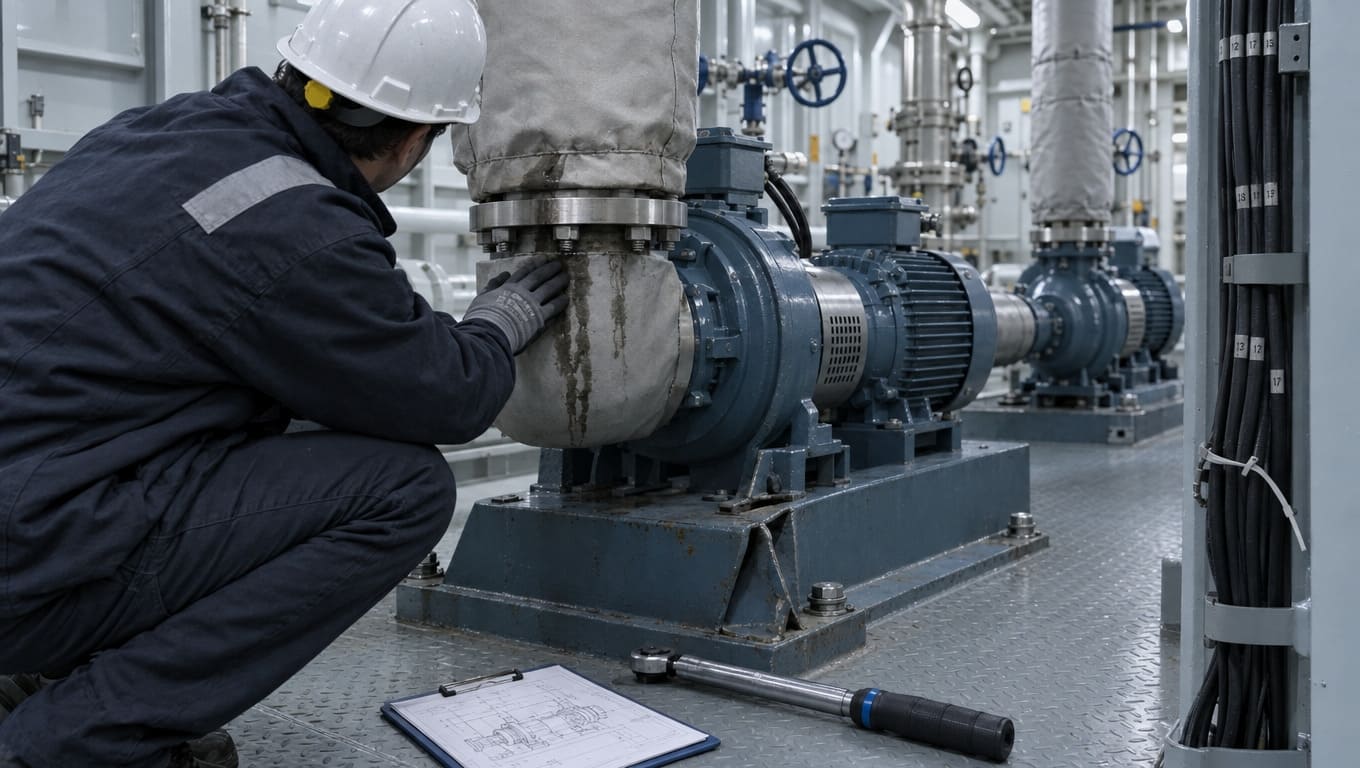
The term EPC is formed from the three key components of a project: Engineering, Procurement, and Construction. This model implies that the contractor is responsible for facility design, procurement of equipment and materials, as well as construction works up to the handover of the completed facility to the client.
This format is widely used in the construction of industrial plants, energy facilities, oil and gas infrastructure, mining complexes, and other capital-intensive projects. Most such projects involve the use of specialized equipment manufactured according to individual technical requirements and often without ready-made equivalents on the market.
This particular feature makes logistics issues especially sensitive. While with the delivery of standard products a damaged shipment can often be replaced relatively quickly, in an EPC project such an option is often unavailable. Manufacturing new equipment may take months, and sometimes even longer.
An additional complication is created by the large number of participants involved in the process. Equipment may be manufactured in one country, cargo consolidated in another, sea transport may pass through several ports, and installation may take place at a remote construction site. At each stage, new risks arise that are difficult to control solely through the efforts of the client or the general contractor.
Standard delivery control is usually limited to checking documents, tracking cargo movement, and accepting the equipment upon arrival. For EPC projects, such an approach is insufficient. By the time a problem is discovered, the loss may already have been caused, while the ability to respond quickly is significantly limited.
What Tasks a Surveyor Solves Within an EPC Project
In EPC projects, a surveyor performs a much broader range of tasks than in standard commercial transportation. Their role is not limited to cargo inspection at one specific point of the route. In practice, the surveyor becomes an independent tool for controlling the quality of logistics operations and the condition of the equipment throughout the entire supply process.
This approach becomes especially important when working with oversized, heavy, and high-tech cargoes. Damage to even one element may lead to a halt in installation works, revision of the construction schedule, and a substantial increase in costs. Survey support helps solve several tasks at once that affect the successful implementation of the project:
- confirming the actual readiness of the equipment for shipment;
- controlling whether the packaging complies with transport and storage requirements;
- recording the condition of the cargo before transportation begins;
- checking compliance with loading and transshipment procedures;
- controlling the execution of equipment securing schemes;
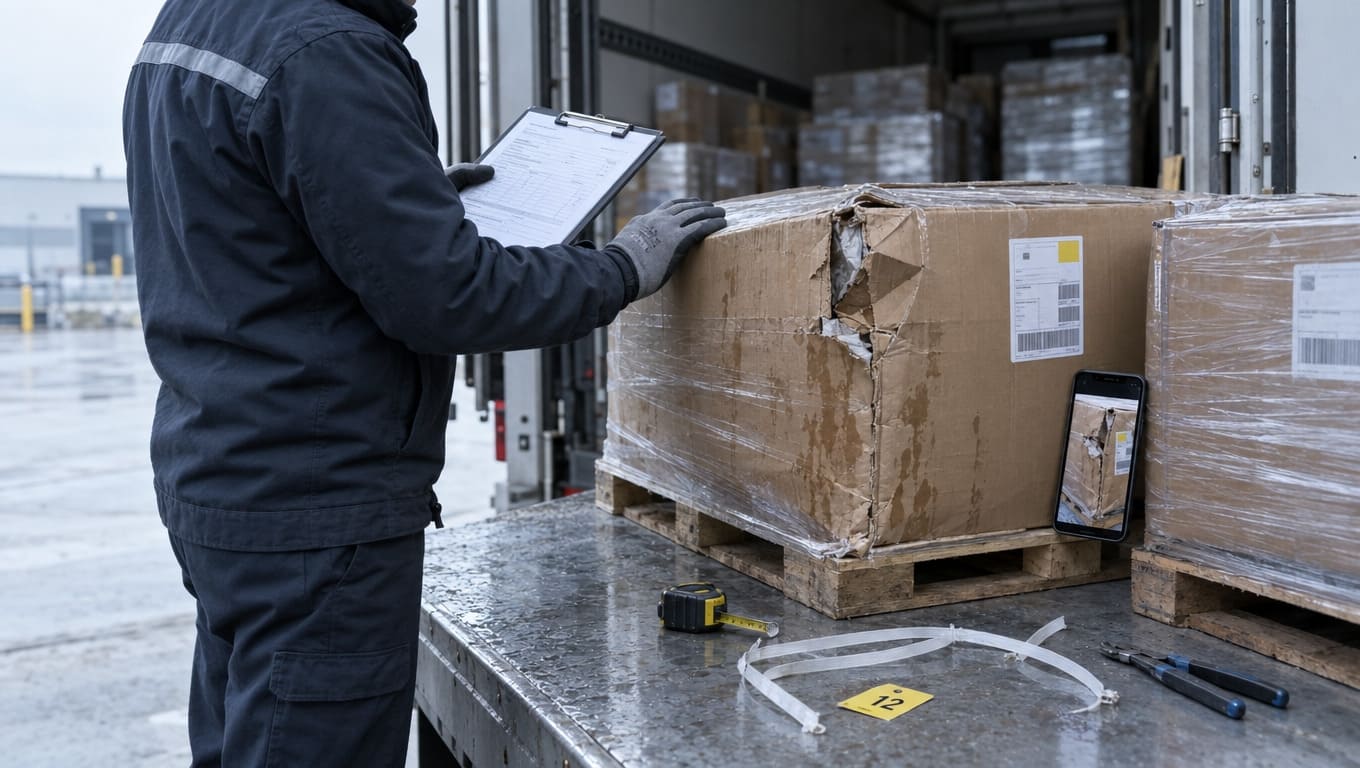
- documenting possible damage and deviations;
- tracking the condition of the cargo after transshipment operations;
- providing independent reporting to all interested parties;
- participating in the investigation of the causes of incidents and damage.
The presence of independent control is especially important in situations where the interests of different project participants do not fully coincide. The manufacturer is interested in timely shipment of the equipment, the carrier in performing the transport operation, and the construction contractor in keeping the construction schedule. In such a system, the surveyor acts as an independent source of information about the actual condition of the cargo and the quality of the operations performed.
At What Stages of the Project Survey Support Is Required
One of the common mistakes is to perceive a surveyor solely as a loading control specialist. In practice, most risks arise significantly earlier or later than the moment of the actual shipment of the equipment.
Project cargo follows a long path from the production site to the construction facility. At each stage, storage conditions, cargo handling methods, responsible organizations, and potential sources of risk change. Accordingly, effective survey support should cover the entire supply chain.
Control is most in demand at the following stages:
- manufacture of equipment at the production site;
- factory testing and acceptance procedures;
- preparation of cargo for packaging and preservation;
- inspection of packaging before dispatch;
- loading onto road, rail, or sea transport;
- transshipment in ports and terminals;
- multimodal transportation between different modes of transport;
- temporary storage at intermediate warehouses;
- unloading at the construction site;
- placement of equipment in the storage area before installation.
The intensity of control may vary depending on the characteristics of the cargo and the project requirements. For some shipments, inspections at key control points are sufficient. For others, continuous supervision of the most critical operations is applied.
Specific Features of Packaging Control for Project Cargo
In EPC projects, packaging performs a much more important function than in standard deliveries of mass-produced goods. Project equipment often passes through several modes of transport, long-term storage, transshipment in ports and terminals, as well as transportation through regions with different climatic conditions. In such circumstances, even minor mistakes in cargo preparation can lead to serious consequences.
An additional difficulty is related to the fact that the value of individual equipment units may amount to millions of dollars. Damage during transportation often means not only repair costs, but also disruption of the construction schedule of the entire facility. For this reason, evaluating the quality of packaging is one of the most important elements of survey support.
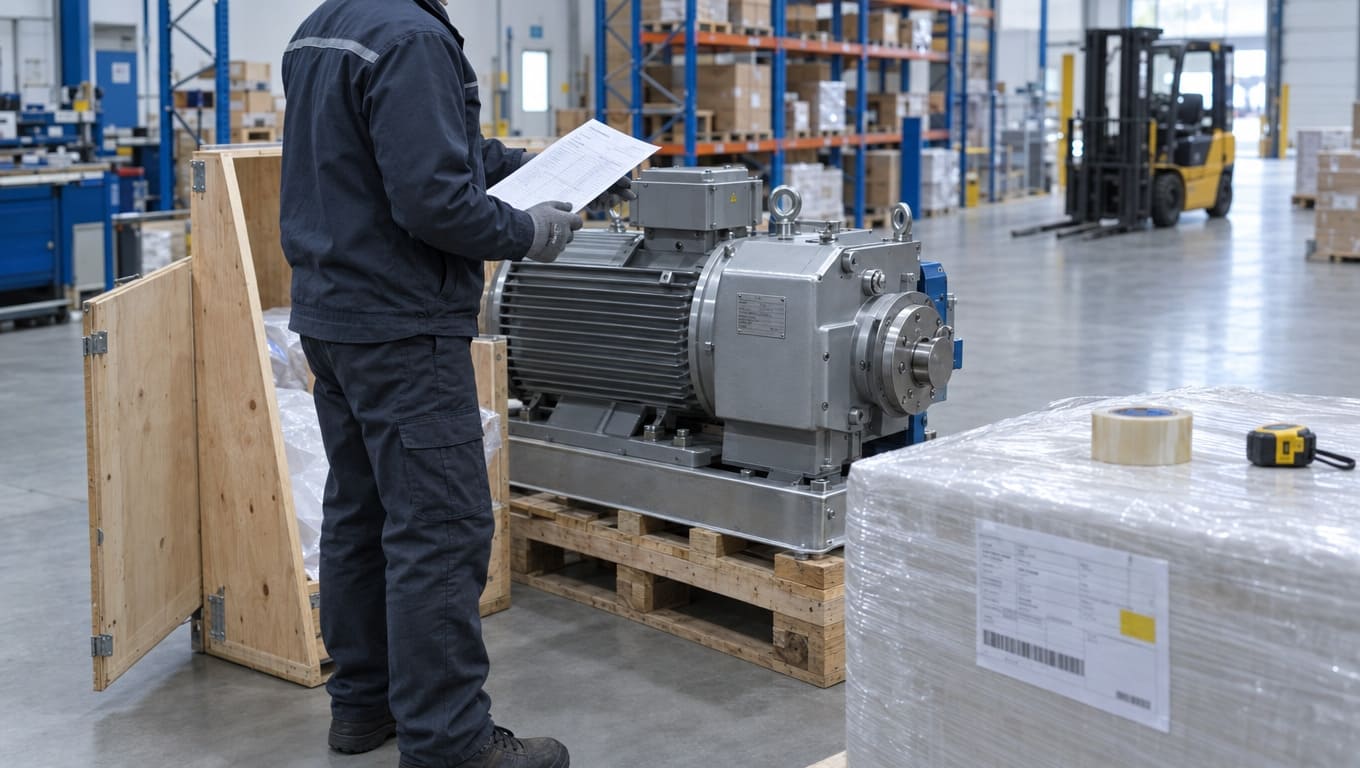
A professional surveyor analyzes not only the outward appearance of the packaging. The inspection includes an assessment of whether the packaging solutions correspond to the route characteristics, transportation duration, cargo properties, and storage conditions.
Within such control, the following are usually assessed:
- whether the packaging design corresponds to the weight and dimensions of the equipment;
- the presence of protection against precipitation and condensation;
- the quality of anti-corrosion preservation;
- the use of moisture-absorbing materials where necessary;
- the strength of the transport packaging;
- the resistance of the packaging to transshipment operations;
- the reliability of securing the equipment inside the packaging;
- the presence of transport markings;
- the correctness of center of gravity and lifting point markings;
- whether the packaging complies with the requirements of the specific transport route.
Particular attention is paid to cargoes that will be transported by sea. Prolonged exposure to a humid environment, temperature fluctuations, and the formation of condensation inside the packaging are among the most common causes of damage to expensive equipment. Errors made at the preservation stage may become evident only several weeks after transportation begins.
No less important is the control of packaging for equipment intended for long-term storage at the construction site. In some projects, several months may pass between delivery and installation. If the packaging is not designed for such conditions, the risk of damage increases significantly even before the equipment begins operation.
Survey Control During Loading and Cargo Securing
Even perfectly manufactured equipment and high-quality packaging do not guarantee cargo safety during transportation. A substantial portion of damage to project cargoes occurs precisely at the stage of loading and unloading operations. The causes may include rigging errors, improper load distribution, the use of unsuitable equipment, or violation of approved cargo handling schemes.
For EPC projects, this issue is especially relevant due to the large amount of oversized and heavy equipment. Reactors, transformers, turbines, heat exchangers, and other large elements require an individual approach to organizing cargo operations. Any mistake may lead to structural deformation, damage to internal components, or total loss of the equipment.
The surveyor controls not only the cargo lifting process itself, but also the preparatory measures. Many critical mistakes occur long before actual loading begins, when securing schemes are developed and technical solutions for transportation are chosen.
During loading operations, particular attention is paid to the following issues:
- whether the lifting equipment corresponds to the equipment parameters;
- the correctness of the installation of rigging equipment;
- compliance with approved slinging schemes;
- the condition of load-handling devices;
- load distribution across lifting points;
- compliance with the equipment manufacturer’s requirements;
- the correctness of cargo placement on the vehicle;
- the quality of securing the equipment;
- the presence of necessary protective elements at points where fastenings contact the cargo;
- compliance with safety requirements.
One of the key tasks of the surveyor is to prevent damage before it occurs. Unlike a subsequent examination carried out after an incident, control at the loading stage makes it possible to identify potentially dangerous solutions in time and require their correction.
The Role of the Surveyor in Multimodal Transportation
Most EPC projects involve the use of complex multimodal logistics schemes. Equipment may be transported successively by road, rail, river, and sea transport. Each change of transport mode is accompanied by additional cargo operations and the transfer of responsibility between different participants in the logistics chain.
It is precisely at such transition stages that a significant part of the risks arises. Damage may remain unnoticed for a long time, while determining the moment of its occurrence later becomes extremely difficult. The more participants are involved in the transportation, the harder it is to establish responsibility for the problems that arise.
Survey support makes it possible to create a continuous system for monitoring cargo condition. After each significant operation, the current condition of the equipment is recorded, which ensures transparency throughout the entire logistics chain.
The most important tasks of the surveyor in multimodal transportation are:
- controlling the condition of the cargo before transfer to the next carrier;
- checking the quality of transshipment operations;
- recording damage when it is discovered;
- documenting the condition of the packaging;
- controlling the integrity of the securing arrangements;
- confirming delivery completeness;
- assessing storage conditions at intermediate facilities;
- controlling compliance with transport documentation requirements;
- preparing independent reports based on inspection results.
Such an approach becomes especially important when transporting unique equipment with long manufacturing times. In such cases, timely detection of damage makes it possible to make quicker decisions on repair, replacement of elements, or adjustment of further logistics operations. The insurance aspect is no less significant. In the event of losses, the availability of consistent survey documentation greatly simplifies interaction with insurance companies and helps objectively determine the circumstances of the incident.
Documenting Equipment Condition as a Risk Management Tool
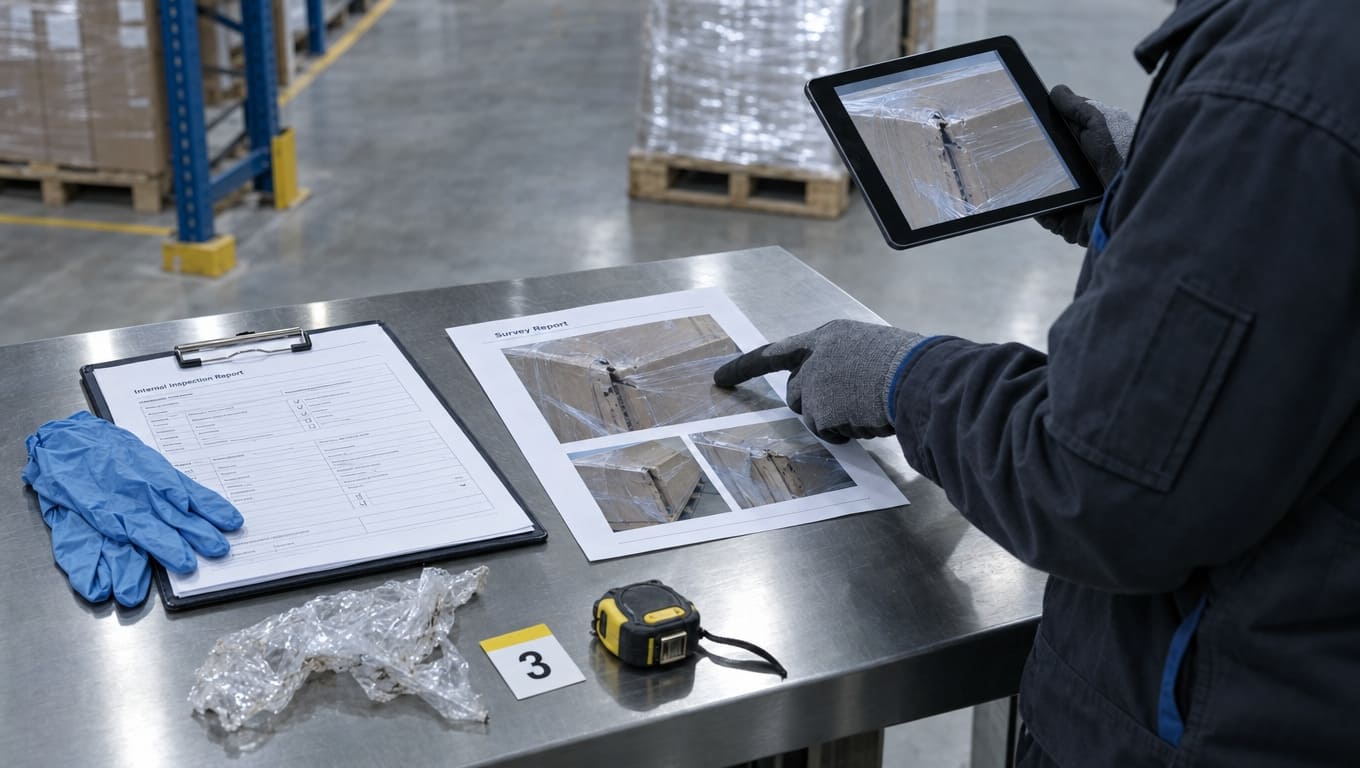
One of the key functions of survey support is the creation of a reliable documentary base for each supply stage. In EPC projects, the importance of such documentation goes far beyond ordinary reporting. In practice, it becomes a risk management tool and a means of protecting the interests of all project participants.
In the implementation of large infrastructure facilities, months or even years may pass between the moment the equipment is manufactured and its commissioning. During this time, the cargo is repeatedly moved, stored, transshipped, and transferred between different organizations. Without systematic documentation, reconstructing the history of the equipment’s condition becomes almost impossible.
High-quality survey documentation makes it possible not only to record events that have already occurred, but also to prevent potential conflicts. The very awareness that each operation is under independent control in itself encourages project participants to treat the performance of their duties more responsibly.
The value of survey reporting is determined not only by the volume of information collected, but also by its evidentiary strength. The documents must make it possible to unambiguously establish the condition of the cargo at a specific stage of transportation, confirm compliance with or violation of established requirements, and record the circumstances of logistics operations.
This becomes especially important when claims arise between project participants. Without objective data, each party often relies on its own interpretation of events. As a result, dispute resolution is delayed, and the financial consequences of the incident may increase substantially.
A comprehensive documentation system usually includes several types of materials:
- inspection reports;
- equipment inspection records;
- photo documentation of cargo condition;
- video materials of key operations;
- loading and securing reports;
- documents on identified non-conformities;
- incident investigation materials;
- conclusions based on inspection results;
- documents on packaging condition;
- confirmation of cargo storage and handling conditions.
For EPC projects, such documentation is important not only within the framework of the current transportation. The materials are often used in interaction with insurers, arbitration bodies, technical consultants, and project clients. The higher the quality of the recorded information, the easier it is to protect the company’s interests in the event of disputes.
Risks of EPC Projects That Survey Support Helps Reduce
The logistics of EPC projects is associated with a large number of uncertainty factors. Even with high-quality planning, it is impossible to eliminate risks completely. However, timely survey support makes it possible to significantly reduce the likelihood of the most costly problems and minimize their consequences.
Many risks become noticeable long before they lead to actual losses. For example, packaging defects may be detected at the production site, and securing errors may be found before transportation begins. If such problems are identified in advance, eliminating them requires significantly lower costs compared to dealing with the consequences of an incident that has already occurred.
The specific feature of EPC projects is that the loss is rarely limited to the cost of the damaged equipment. Much more serious consequences are often associated with disruption of the construction schedule, contractor downtime, and the need to revise the sequence of works.
Survey support helps reduce the following categories of risks:
- damage to equipment during loading and unloading;
- violation of packaging and preservation requirements;
- errors in securing cargo on vehicles;
- damage to equipment during sea transportation;
- the occurrence of corrosion during transportation and storage;
- loss of individual supply elements;
- errors in cargo marking and identification;
- violations of storage conditions at intermediate sites;
- damage during transshipment between modes of transport;
- disputes between participants in the logistics chain regarding the causes of the loss;
- difficulties with insurance settlement;
- delivery delays due to identified violations.
A special place is occupied by risks associated with non-obvious damage. Some types of equipment may outwardly appear intact after transportation, yet sustain internal damage due to impact loads, vibration, or improper securing. Identifying such problems at an early stage helps avoid much more serious consequences during installation or operation.
Mistakes Clients Make When Organizing Survey Support
Despite the widespread use of survey services in project logistics, many clients still regard such control as a formal procedure or an additional cost item. This approach often leads to the surveyor being involved too late or being given a limited scope of authority.
In practice, the effectiveness of support is determined not only by the professionalism of the surveyor, but also by how competently the control system itself is structured. Even experienced specialists cannot compensate for planning deficiencies if key supply stages remain outside the observation zone.
Mistakes occur especially often in large international projects where logistics responsibility is distributed among several departments or contractors. Under such conditions, individual risks may remain unnoticed until serious problems arise.
The most common mistakes include:
- involving the surveyor only at the loading stage;
- refusing to control the preparation of equipment for transportation;
- absence of inspections after transshipment operations;
- controlling only the most expensive cargoes;
- saving on photo and video recording of operations;
- lack of unified reporting requirements;
- untimely response to surveyor remarks;
- insufficient interaction between the logistics and technical departments of the project;
- using different control standards at different stages of transportation;
- engaging specialists without experience in project cargoes.
One of the most costly mistakes is the late involvement of the survey company. When control begins after problems arise, its possibilities are limited to documenting the consequences and participating in the investigation. The main value of survey support lies precisely in preventing risks, and not only in documenting incidents that have already occurred.
Another common problem is the lack of continuity of control. Checking individual stages provides only fragmentary information about the cargo condition. For complex EPC projects, a systematic approach covering the entire logistics chain is much more effective.
How to Choose a Survey Company for an EPC Project
The choice of a survey company directly affects the effectiveness of project logistics risk management. At the same time, focusing exclusively on the cost of services is often unreasonable. For EPC projects, the competencies of specialists, geographic coverage, and the ability to respond quickly to changing circumstances are much more important.
It should be taken into account that project logistics differs significantly from standard freight transportation. Work with oversized equipment, complex securing schemes, sea transportation, and multimodal routes requires specialized knowledge and practical experience.
It is recommended to evaluate a potential contractor comprehensively. It is important to understand not only the list of services offered, but also the company’s actual capabilities in supporting international deliveries.
When choosing a survey organization, attention should be paid to the following factors:
- experience in EPC projects and project cargoes;
- availability of specialists in key supply regions;
- understanding of the specifics of international logistics;
- competence in loading and unloading operations;
- experience in interaction with insurance companies;
- ability to conduct inspections within tight timeframes;
- quality and level of detail of reporting;
- availability of unified control standards;
- technical training of inspectors;
- experience in supporting complex multimodal transportation.
The issue of responsiveness deserves special attention. EPC projects are rarely implemented under a completely predictable schedule. Route changes, postponed deadlines, unplanned transshipments, and other events require quick decision-making. The ability to organize an inspection within a short time often becomes a critically important factor for the client.
If your project requires independent supply control, equipment inspection, project cargo support, or survey assistance at various stages of international transportation, LVS Global specialists can help organize comprehensive support taking into account the specifics of the EPC project, route features, and the requirements of all supply participants. This approach helps reduce logistics risks and ensures more predictable project implementation at all stages of its execution.