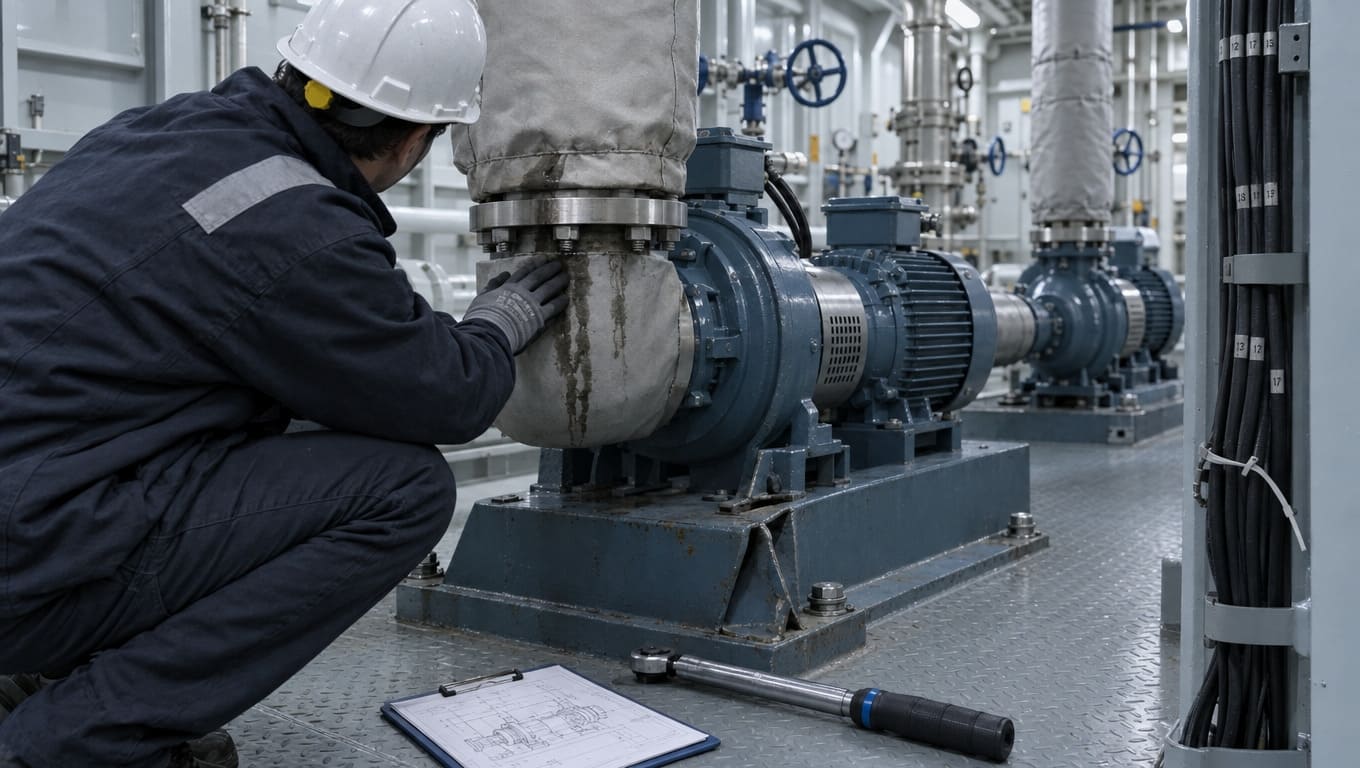
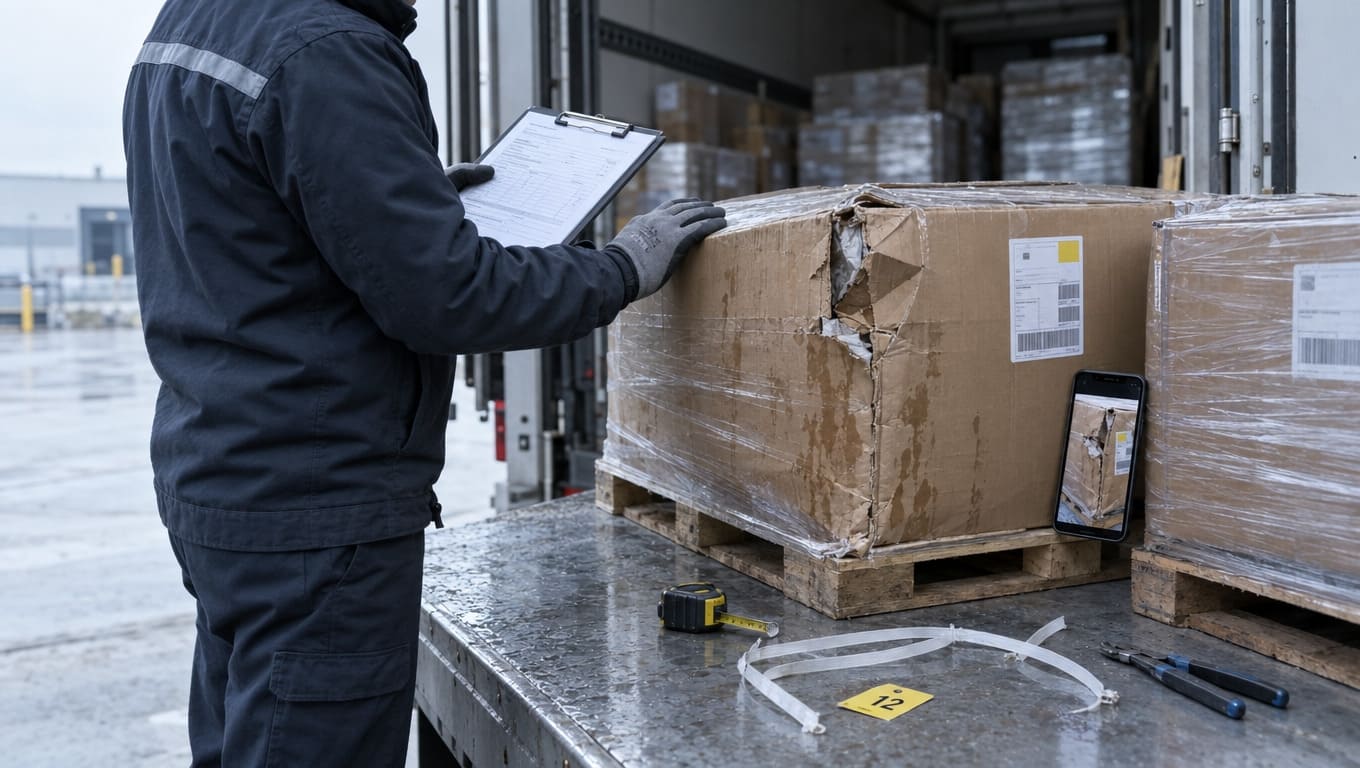
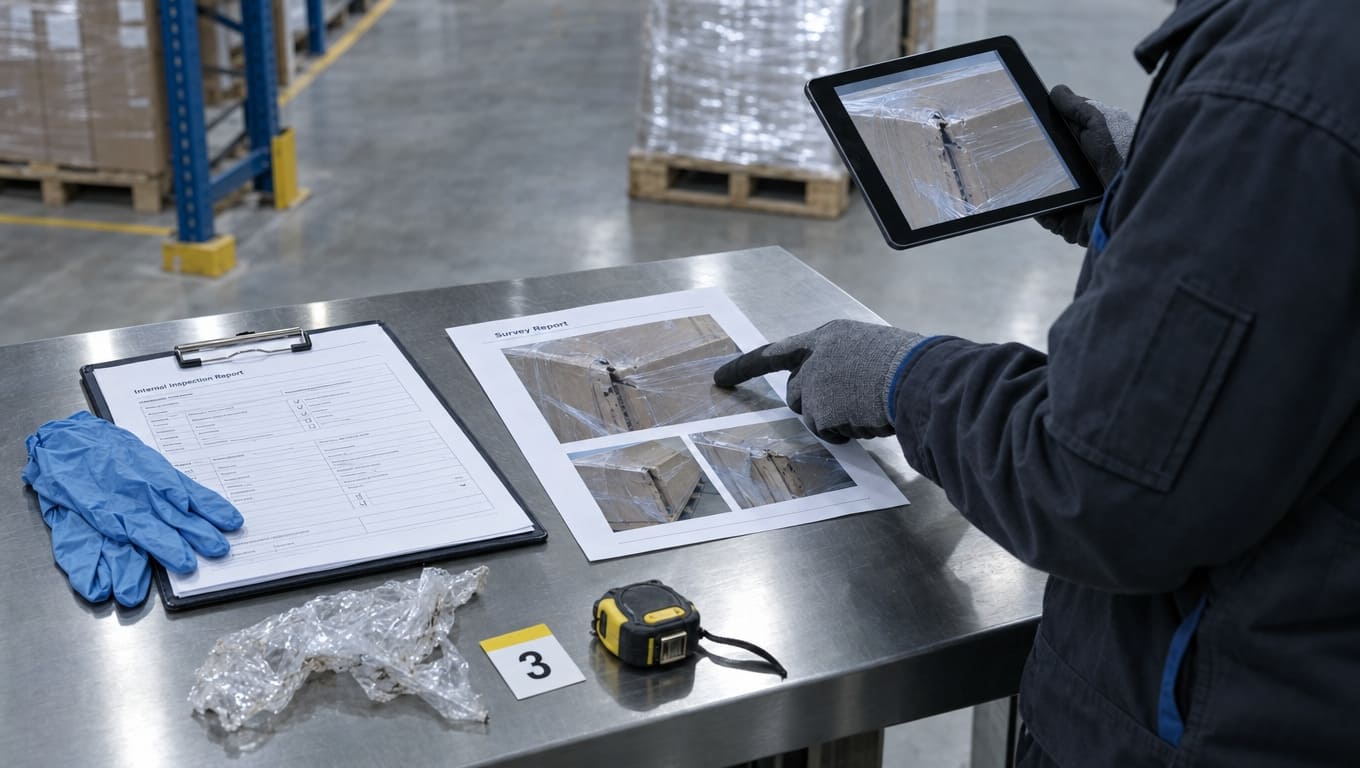
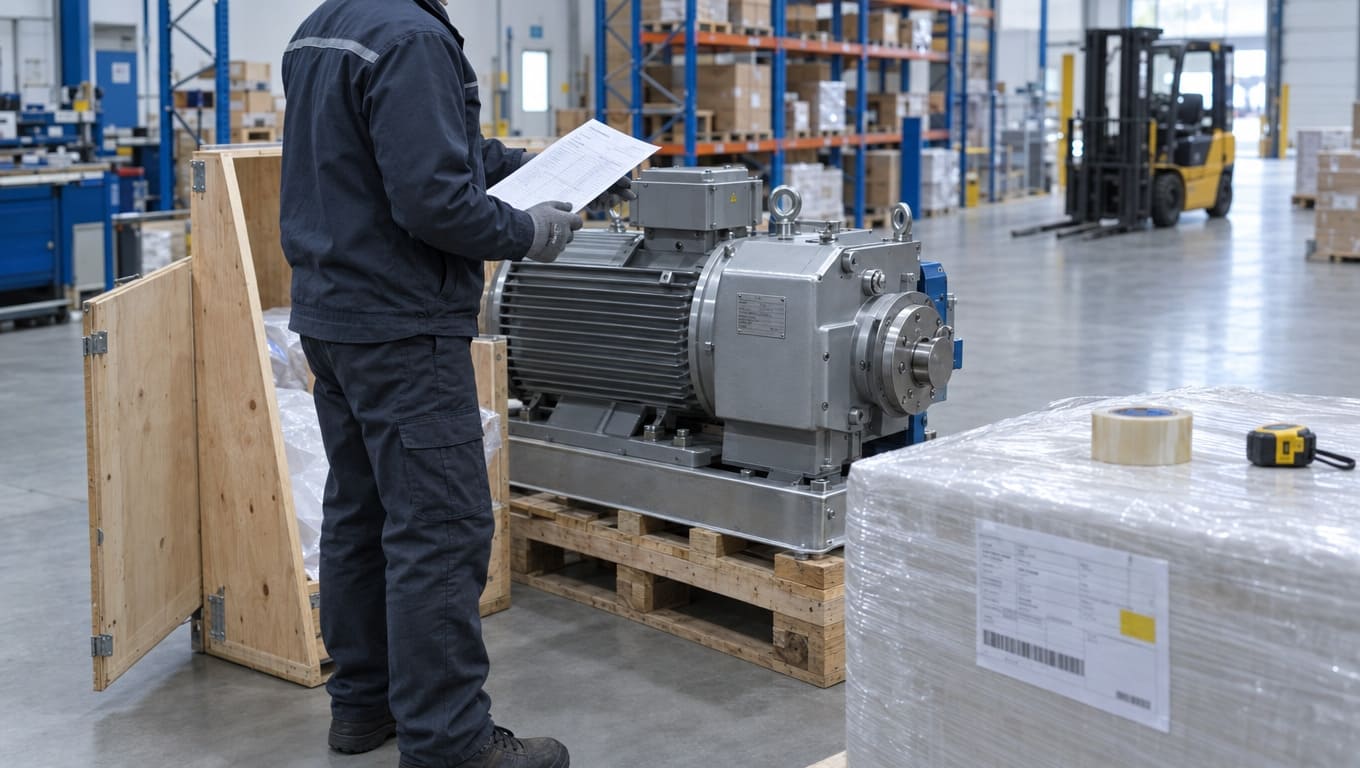
In technical investigations, there is a rule that applies equally to industry, construction, aviation, and transport logistics: the same result does not mean the same mechanism of occurrence. The same visible damage may be the result of completely different processes taking place at different stages of transportation.
Let us imagine two boxes with identical dents on the side surface. In one case, the damage appeared because of a forklift impact during unloading. In the second case, it resulted from prolonged pressure from adjacent cargo that gradually shifted during sea transportation. Visually, the defects may look very similar, but the circumstances of their occurrence, the responsible transport participants, and the ways to prevent such situations would be completely different.
A similar situation can also be observed with internal damage. For example, expensive equipment may fail without any visible defects in the packaging. The cause may be either a single strong impact, many days of vibration, repeated dynamic loads during rail transportation, or improper securing inside the transport packaging. The final result is the same – the equipment is damaged – but the mechanisms of how the defect developed are fundamentally different.
For this reason, specialists begin an investigation not with the question “who is to blame,” but with the question “what process led to exactly this kind of damage.” The answer to this question makes it possible to significantly narrow down the range of possible causes and only then move on to analyzing the actions of specific transport participants.
Another important feature is that transport damage rarely occurs because of a single event. In many cases, the defect develops gradually. A slight cargo shift during road transportation may weaken the securing, sea motion may intensify the resulting loads, and subsequent terminal transshipment may lead to the final deformation of the packaging. As a result, it becomes impossible to determine one single cause – the entire sequence of impacts must be assessed.
That is why professional expertise is always based on an analysis of a combination of factors. An isolated defect almost never tells the whole story of the shipment. Only by comparing the nature of the damage with the route, transport conditions, documentation, and inspection results can the real picture of what happened be reconstructed.
What Factors Are Considered When Determining the Cause of Damage
The nature of damage cannot be analyzed separately from the transport conditions. The same defect may have different origins depending on what kind of cargo was transported, by what means it was delivered, how long the route lasted, and what operations were performed along the way.
That is why expert assessment always begins with collecting the fullest possible information. A specialist needs to understand not only what the damage looks like, but also under what conditions the cargo was located throughout the entire logistics chain. The accuracy of the conclusions directly depends on the completeness of this information.
Each factor is considered not separately, but in combination with the others. Only a comprehensive analysis makes it possible to determine which causes truly correspond to the transport circumstances and which can be ruled out already at the initial stage of the investigation.
When determining the mechanism of how the damage occurred, the following circumstances are usually taken into account:
- Characteristics of the cargo itself. Different categories of products react differently to mechanical loads, vibration, changes in temperature, and humidity. What is safe for metal products may be critical for electronics, medical equipment, or chemical industry products.
- Type and condition of the packaging. Not only the suitability of the packaging for the properties of the cargo is analyzed, but also its actual condition before and after transportation. The behavior of packaging materials under different types of load helps determine the probable mechanism of the defect.
- Transport route. The more stages the logistics chain includes, the wider the range of potential causes of damage. Transshipment through several ports, changes of transport modes, and intermediate storage increase the number of factors that need to be considered during the investigation.
- Transport used. Road, rail, sea, and air transportation differ in the nature of dynamic loads, the level of vibration, the duration of exposure to the external environment, and the cargo handling conditions.
- Duration of transportation. Some damage occurs almost instantly, while other damage is the result of prolonged exposure to adverse factors. The time the cargo spends in transit helps assess the probability of the development of certain processes.
- Storage and transshipment conditions. If the cargo was repeatedly placed in warehouses or terminals, the temperature regime, humidity, stacking methods, and handling technology are analyzed. Sometimes it is precisely these stages that become decisive in the development of damage.
- Sequence of logistics operations. The order of loading, transshipment, temporary storage, and delivery makes it possible to establish when exactly the conditions for the appearance of a particular defect could have arisen.
Each of the listed factors by itself rarely provides an unambiguous answer. However, their combination makes it possible to gradually exclude unlikely versions and determine the most realistic mechanism of damage. That is why expert investigation always begins with studying the circumstances of transportation, and not only with inspecting the cargo itself.
Which Types of Damage Are Most Often Misinterpreted
Many transport damages look so typical that there is a temptation to immediately name their cause. This approach is understandable: the participants in the shipment want to identify the liable party faster, file a claim, and begin the settlement of losses. However, it is precisely such hasty conclusions that become one of the most common causes of mistakes during an investigation.
The problem is that the appearance of damage reflects only the final result of the impact, but says almost nothing about the process that led to it. The same deformation of packaging may occur within a few seconds or may develop over several weeks. In one case, the cause may be a gross violation of loading procedures, while in another it may be a combination of several less noticeable factors, none of which alone would have led to damage.
When conducting an examination, specialists try to move away from obvious explanations and consider several possible scenarios at once. This helps avoid a situation in which the initial version seems convincing but is not confirmed by objective data.
The following types of damage are most often interpreted incorrectly:
- Dents in the packaging or in the cargo itself. They are often associated with a single impact, although similar deformation may appear due to prolonged pressure from adjacent cargo, improper stacking, cargo shifting inside the container, or uneven load distribution during transportation.
- Crushing of the packaging. Such defects are often explained by excessive top load. However, the cause may be the loss of stiffness of the packaging material due to high humidity, incorrect packaging choice, or gradual deformation under vibration.
- Cargo shifting. At first glance, this indicates insufficient securing. However, shifting may result from the failure of fastening elements due to dynamic loads, changes in the center of gravity during transportation, pallet deformation, or even partial destruction of the packaging.
- Cracks in products. They are often believed to have appeared as a result of impact. In practice, cracks may form under the influence of temperature fluctuations, internal material stresses, vibration, or uneven load during storage.
- Traces of corrosion. These are usually associated with water ingress, although the development of corrosion processes may be caused by prolonged exposure to condensation, increased humidity inside the container, violation of storage conditions, or the characteristics of packaging materials.
- Moisture traces on the packaging. They do not always mean that the container was not airtight. Wetting may be caused by moisture condensation, temperature fluctuations, the characteristics of the cargo itself, or violation of the storage regime at intermediate warehouses.
- Tears in the packaging. Such damage is often explained by careless handling with loading equipment. However, similar defects may arise because of internal cargo movement, excessive tension of packaging materials, or failure of fastening elements.
- Deformation of pallets. The cause is not always overload. Sometimes wooden pallets lose strength due to high humidity, long-term storage, or initial hidden defects in the wood.
Each of these examples shows how dangerous it is to draw conclusions based solely on the external appearance of damage. Even an experienced specialist will not determine the cause until the transport conditions, accompanying documents, and other circumstances that may have affected the condition of the cargo have been studied.
Why Mechanical Damage Does Not Always Occur Due to Impact
When speaking about mechanical damage, most people imagine cargo falling, collision with a forklift, or another strong external impact. Such situations do occur, but they represent only part of the causes that lead to deformation of the products or packaging.
During international transportation, cargo is subjected to numerous loads, each of which may be insufficient to cause immediate destruction, but together they may lead to serious damage. This is especially typical for routes with several transshipments and long transport duration.
Mechanical impact is not always associated with a single event. In many cases, destruction develops gradually, and the final damage becomes visible only at the destination. That is why the analysis of the nature of the defect is always supplemented by an examination of the transport conditions.
The most common mechanisms for the occurrence of such damage include the following processes:
- Prolonged vibration exposure. During the movement of road vehicles, railway trains, and sea vessels, cargo is constantly subjected to vibration loads. Their intensity may be relatively low, but the duration of exposure may sometimes amount to dozens of days. Constant vibration gradually weakens the securing, increases internal cargo movement, and intensifies friction between individual packaging elements. As a result, abrasions, deformations, damage to protective materials, and even destruction of individual structures appear.
- Dynamic loads during vehicle movement. Every braking, acceleration, turn, or maneuver is accompanied by a redistribution of the forces acting on the cargo. If the securing is calculated incorrectly or carried out with violations, even normal movement conditions may cause the products to shift. Such loads are especially dangerous for heavy equipment and cargoes with a high center of gravity, since the resulting forces significantly exceed the static weight of the item.
- Errors in load distribution. Even a securely fixed cargo may be damaged if the load inside the container is distributed unevenly. Excessive pressure on certain areas of the packaging leads to local deformations that gradually increase as transportation continues. Such damage is often mistaken for the consequences of a single impact, although in fact it is the result of prolonged exposure to incorrectly distributed mass.
- Shift in the center of gravity. A change in the position of individual cargo units can significantly affect the stability of the entire load. After one element shifts, the load on adjacent structures increases, creating conditions for further development of damage. Such processes are often chain-like in nature. A slight initial movement gradually leads to deformation of the securing, then to an increase in the amplitude of shifting, and later to serious mechanical damage.
- Failure of fastening elements. Securing belts, bracing structures, wooden fixing elements, and other securing means are designed for certain loads. If they were installed incorrectly, made of insufficiently strong materials, or subjected to excessive impact during transportation, they may fail even without any emergency situation. After the loss of reliable fixation, the cargo begins to move freely inside the container, which significantly increases the likelihood of further damage.
- A combination of several factors. The most difficult cases are associated with the simultaneous influence of several causes. For example, a small cargo shift may occur due to securing mistakes. Then vibration amplifies this shift, dynamic loads increase the pressure on the packaging, and subsequent transshipment becomes the final factor leading to visible damage. In such situations, it is impossible to explain the occurrence of the defect by one event. The expert has to analyze the entire sequence of processes, each of which contributed to the development of the damage.
That is why mechanical damage does not always indicate a gross violation of cargo handling rules. In many cases, it is the result of the cumulative impact of several factors, each of which must be taken into account when determining the cause of the loss.
Why Moisture Also Has Different Sources
Damage related to moisture exposure is among the most difficult to investigate. The reason is that water and high humidity may reach the cargo in different ways, while the external consequences in many cases look almost identical. Wet packaging, traces of corrosion, changes in material properties, or spoilage of products do not in themselves indicate when and how the exposure occurred.
When traces of moisture are detected, the first version usually involves a breach of the container’s tightness or precipitation entering during transportation. Such a scenario is indeed possible, but it is far from the only one. In international logistics, there are several mechanisms by which moisture forms, and each of them requires separate analysis.
To determine the cause, specialists assess not only the presence of water, but also the nature of its impact. The location of wet areas, the direction of drips, the condition of the inner surfaces of the container, the packaging materials, and the transport route help reconstruct the possible sequence of events.
The most common sources of moisture are:
- Condensation inside the container. This is one of the most frequent cases and is often mistaken for leakage. With sharp temperature changes, the air inside the container may become saturated with moisture, which then settles on metal surfaces and gradually gets onto the cargo. This problem is especially relevant during long sea voyages passing through different climate zones.
- Loss of container tightness. Damaged door seals, deformation of structural elements, roof or wall defects may allow water to enter inside. At the same time, the place where traces of moisture are found does not always coincide with the place where the water entered, since the liquid may move inside the container during transport.
- Exposure to precipitation. Wetting may occur during loading and unloading operations, especially if the cargo is temporarily located outside a closed facility or the work is carried out in unfavorable weather conditions.
- Violation of storage conditions. Even if transportation went without problems, improper placement of cargo in a warehouse may lead to the appearance of moisture. Exposure to cold surfaces, insufficient ventilation, or proximity to moisture sources may cause damage already after the cargo has arrived.
- Characteristics of the goods themselves. Some types of products release moisture during storage or transportation. If the packaging does not provide the necessary air exchange, increased humidity may form inside the cargo unit, leading to deterioration of the products.
- Incorrect use of packaging materials. Some materials are capable of retaining moisture inside the cargo unit. As a result, even a small amount of water or condensation may lead to significant consequences because evaporation occurs slowly.
It is often impossible to distinguish these causes only by the external appearance of the damage. For example, traces of corrosion on metal parts may appear both after direct contact with water and after prolonged stay in a humid environment without visible wetting. For equipment with electronic components, even brief exposure to high humidity may have serious consequences.
How Specialists Distinguish Similar Damage from Each Other
Establishing the cause of damage requires not only visual inspection, but also an understanding of the processes that could have led to the appearance of a specific defect. The external similarity of damage often misleads even the transport participants who are well familiar with the characteristics of their goods.
Professional expertise is based on comparing the actual signs of damage with the possible mechanisms of its occurrence. Specialists analyze not a separate element, but the entire set of circumstances: cargo condition, packaging, route, transport equipment, and movement history.
The main objective of such analysis is to answer not only the question “what happened,” but also “how exactly did it happen.” It is the mechanism of occurrence that makes it possible to determine the probable stage at which the damage appeared and to assess the responsibility of the transport participants.
Several methods are used for this purpose:
- Examination of the nature of deformations. The shape of the damage often contains information about the impact that caused it. The direction of bending, the depth of deformation, the location of pressure traces, and the nature of material destruction make it possible to determine whether the load was short-term or prolonged. For example, a sharp impact usually leaves local traces with clear boundaries of influence. Gradual pressure more often leads to smooth deformation over a large area. These differences help specialists distinguish damage that looks similar outwardly but differs in origin.
- Analysis of the condition of the packaging. Packaging is a kind of source of information about the events that occurred during transportation. Tears, abrasions, traces of compression, failure of fastening elements, and changes in the shape of the packaging make it possible to determine the direction and nature of the load. Of special importance is the comparison of the condition of the packaging and the cargo itself. If the packaging is damaged but the goods inside are intact, this may point to one mechanism of impact. If the outer packaging looks intact but internal elements are damaged, completely different causes are possible.
- Inspection of transport equipment. The condition of the container or vehicle helps determine whether external conditions could have caused the damage. Impact marks, deformations, loss of tightness, or damage to the container floor may confirm some versions and exclude others. For example, the absence of any traces of external impact does not prove the absence of damage during transportation, but it forces the consideration of other options – improper securing, internal movement, or gradual load exposure.
- Analysis of documents and transport history. Documents make it possible to compare the condition of the cargo at different stages of the route. Notes made during acceptance, inspection reports, photographs, transshipment data, and movement records help establish when the first signs of change appeared. Documents prepared at the moment when the cargo is transferred between responsible parties are especially valuable. They make it possible to determine in what condition the goods were before and after a specific operation.
- Comprehensive comparison of all factors. No individual sign provides an absolute guarantee of a correct conclusion. Even an experienced specialist may make a mistake if they consider only one element – for example, the nature of a dent or the condition of the packaging. That is why the final conclusion is formed on the basis of the totality of the data. The nature of the damage is compared with the transport conditions, the characteristics of the cargo, the packaging method, and the sequence of operations. Only after such analysis can a conclusion be made about the most probable cause of the loss.
Why Trying to Immediately Find the Liable Party Often Leads to Mistakes
After damage is discovered, business owners naturally seek to identify the responsible party as quickly as possible. Financial losses require decisions: claims must be filed, the insurance company must be involved, and replacement or restoration work must be planned.
However, a rushed search for the liable party often becomes the cause of new problems. If responsibility is determined without a sufficient evidentiary basis, the claim may be rejected, and time for an objective investigation will be lost.
One of the main mistakes lies in the fact that transport participants often evaluate the situation only from the standpoint of their own interests. The consignee sees damaged goods and considers the carrier responsible. The carrier points to deficiencies in the packaging. The shipper refers to proper loading. As a result, each party defends its own position, but the objective cause remains undetermined.
Another problem is related to the fact that the discovery of damage does not mean discovering the moment when it occurred. The cargo may have arrived at the consignee in a damaged condition, but the defect itself may have appeared much earlier. Without analyzing the entire transport chain, it is impossible to determine who actually controlled the cargo at the moment when the problem arose.
A professional investigation begins with a different question: what facts confirm or refute each of the possible versions? This approach helps avoid accusations based only on assumptions.
In such situations, an independent survey becomes an instrument of objective analysis. The specialist records the condition of the cargo, studies the transport circumstances, analyzes possible causes, and forms a conclusion based on evidence. This helps the parties move from dispute to a substantive discussion of facts.
LVS Global conducts independent survey inspections, examinations of damaged cargo, control of loading and unloading operations, and preparation of expert conclusions for participants in international trade. The specialists help determine the mechanism of damage occurrence, collect the evidentiary base, and establish the most probable stage at which the loss appeared.