Test certificates confirm the results of checking certain product characteristics in accordance with standards, technical specifications, or customer requirements. In different industries, such documents may be referred to as test certificates, test reports, testing records, certificates of analysis, or by other names.
The content of such a document depends on the type of product and the purpose of the verification. For some goods, mechanical characteristics are critical, while for others chemical composition, electrical parameters, operational safety, or resistance to external impact are more important.
The sources issuing such documents may also differ. Testing may be carried out by the manufacturer itself, an independent laboratory, a certification center, or a specialized testing organization.
What Test Certificates Usually Confirm
- Physical characteristics of the product
- Chemical composition of materials
- Mechanical properties of items
- Electrical parameters
- Safety indicators
- Compliance with industry standards
- Results of laboratory studies
- Resistance to certain operating conditions
- Reliability and durability indicators
- Compliance with the customer’s technical requirements
The main purpose of testing is to confirm specific product parameters. A certificate answers whether the tested sample meets the established criteria for a defined set of characteristics.
For many product types, such documents are indeed highly important. They help confirm that the material has the required properties, the equipment has passed the prescribed tests, and the product complies with the regulatory requirements of a specific market. In a number of industries, the availability of certificates is a mandatory delivery condition.
However, the scope of certificates has its limits. A document confirms the results of a specific testing procedure, but it does not replace a comprehensive assessment of the entire batch and the conditions of its preparation for shipment.
What Limitations Test Certificates Have
Despite the high value of test results, the capabilities of certificates are much narrower than many customers assume. Misunderstanding the role of such documents often creates unjustified confidence in product quality and leads to an underestimation of actual risks.
The main feature of any testing is that it is carried out under strictly defined conditions and has a specific object of verification. A certificate records results at the time of testing, but it does not ensure control of the products during all subsequent stages of production, storage, packaging, and transportation.
An additional difficulty is that testing is usually aimed at evaluating individual characteristics. Even if the check is carried out properly and the results are fully reliable, this does not automatically mean the absence of other types of non-conformities.
From a practical point of view, certificates have a number of objective limitations:
- Testing is most often carried out on selected samples rather than on the entire batch
- The results relate only to the moment the check was performed
- The document does not confirm the quality of all production operations
- The certificate does not reflect the condition of the products after testing is completed
- Testing does not assess packaging quality
- The document does not confirm the correctness of marking of the entire batch
- The results do not show the storage conditions of the products
- The certificate does not record damage that occurred after testing
- Testing does not reveal packing or completeness errors
- The document does not confirm the product’s readiness for international transportation
It is especially important to consider the time factor. A significant period may pass between testing and actual shipment. During this time, the goods may be moved between warehouses, subjected to additional handling, repacked, or kept waiting for dispatch. All these processes may affect their condition.
Special attention should be paid to packaging. Even products that fully comply with test requirements may be damaged during international transportation because of improper transport preparation. A certificate does not assess packaging quality and does not confirm that the cargo can safely pass through the entire logistics route.
Why Having a Certificate Does Not Guarantee the Quality of the Entire Batch
One of the most common misconceptions is that positive test results automatically apply to the entire volume of supplied products. In practice, this is далеко not always the real situation.
The production of almost any product involves a certain variability of processes. Even with modern quality control systems in place, the characteristics of individual items may differ. The more complex the production cycle and the larger the output, the higher the probability of isolated non-conformities.
That is why testing in most cases is based on the principle of sample control. Certain samples are checked that are supposed to represent the batch as a whole. This approach is generally accepted and economically justified, but it does not provide a one-hundred-percent guarantee that all units are identical.
Various production factors may influence the results:
- Replacement of raw materials or components
- Equipment readjustment
- Changes in production parameters
- Different production shifts
- Human factor
- Differences between material lots
- Technical failures of equipment
- Errors in internal quality control
- Adjustments to technological processes
- Peculiarities of finished goods storage
An additional risk arises when testing is carried out at early stages of production. In such cases, a significant amount of time may pass between the testing of the sample and the release of the finished batch. During this period, the process may change, and the actual product characteristics may differ from the original test results.
Therefore, a test certificate should be viewed as confirmation of certain characteristics of the tested samples, not as a universal guarantee of the quality of the entire supplied batch.
How Independent Inspection Differs from Testing
Although both testing and inspection are quality control tools, their purposes differ significantly. Both procedures aim to reduce risks when purchasing products, but in practice they answer different questions.
Testing is intended to verify specific product characteristics. Its task is to determine whether a sample complies with established technical requirements for certain parameters. The result is a document containing measurable indicators and a conclusion on compliance or non-compliance with the stated criteria.
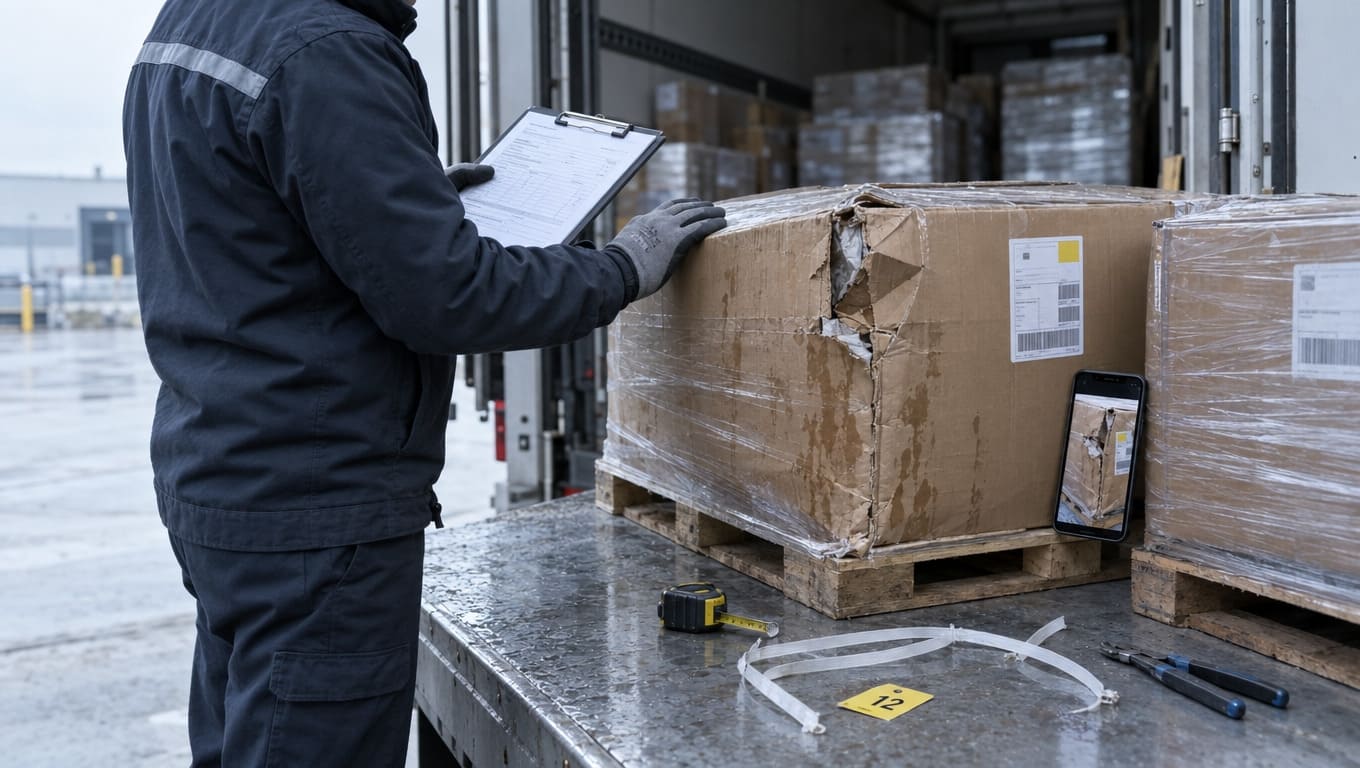
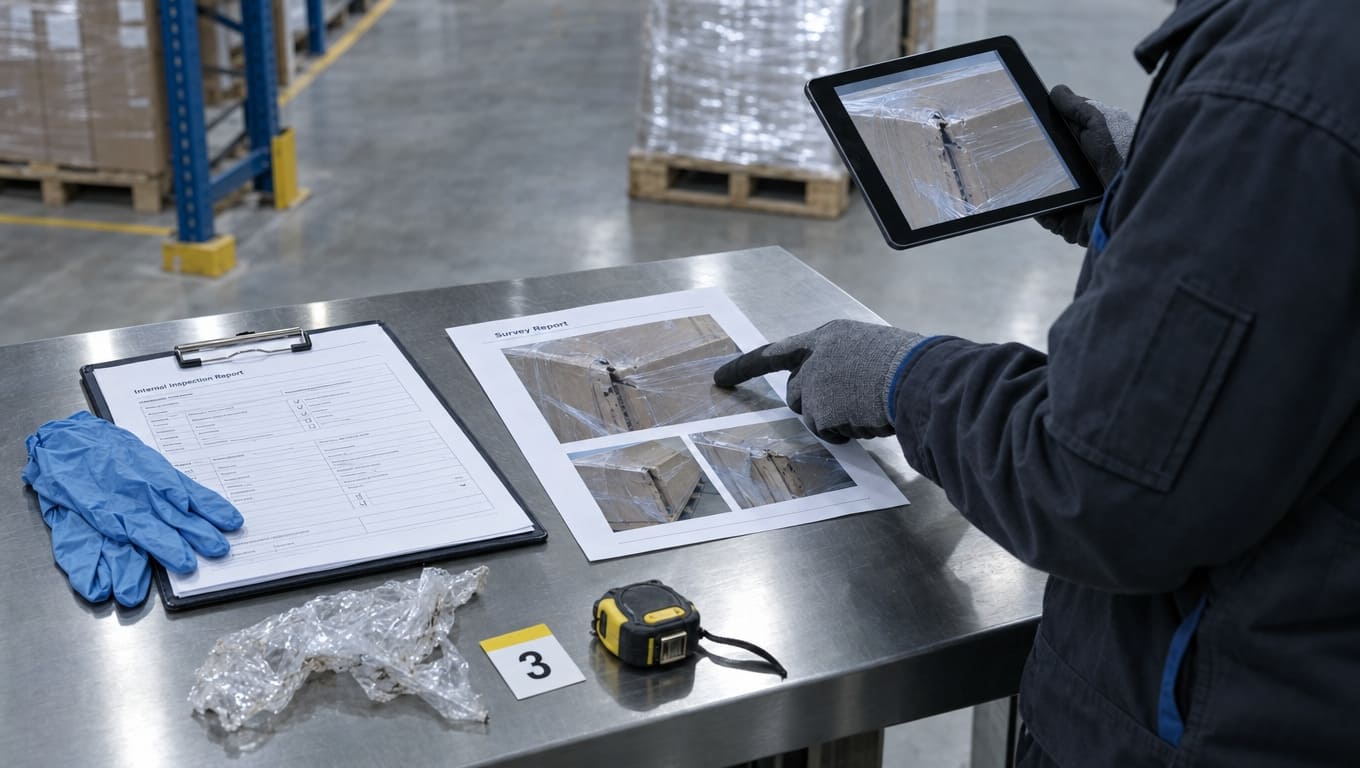
Inspection is built on a different principle. It is aimed at assessing the actual condition of the products, packaging, marking, completeness, and the batch’s readiness for further movement through the supply chain. The focus is not only on the product itself, but on the entire set of factors that can affect the shipment outcome.
The difference between these approaches is especially noticeable in the objects of control:
- Testing checks individual product characteristics
- Inspection assesses the actual condition of the batch
- Testing is performed according to a pre-established methodology
- Inspection makes it possible to identify a broad range of non-conformities
- Testing records measurement results
- Inspection analyzes the quality of execution and compliance with requirements
- Testing is focused on specific indicators
- Inspection considers the product in the context of the entire shipment
In most international projects, the issue is not limited solely to the technical characteristics of the product. The customer needs to understand whether the products comply with the specification, whether the batch is complete, whether the marking has been correctly made, whether the packaging is suitable for transportation, and whether any damage appeared after production was completed.
What Risks Remain Without Inspection Even When Certificates Are Available
Receiving a full set of certificates often creates a feeling of strong protection for the customer. However, some risks continue to exist regardless of how thoroughly the test results are documented. Many issues arise outside the laboratory or testing bench and are related to production, packaging, storage, shipment preparation, and warehouse handling.
Without inspection control, the following risks remain:
- Manufacturing defects in individual items
- Product assembly errors
- Use of non-approved components
- Actual dimensions not matching the customer’s requirements
- Shortages in shipment completeness
- Marking errors
- Mixing of different product batches
- Damage during warehouse storage
- Packaging defects
- Violations of equipment preservation rules
- Damage occurring after testing
- Shipment preparation deviating from contract requirements
For international transportation, such risks are particularly important. Once the goods cross the border, correcting identified problems becomes much more difficult and expensive. In many cases, the cost of correcting errors far exceeds the cost of inspection before dispatch.
What an Inspector Can Detect That a Certificate Will Not Show
One of the key advantages of independent inspection is the ability to assess the actual condition of the products immediately before shipment. This approach makes it possible to detect problems outside the scope of most testing procedures.
During inspection, the following may be identified:
- Mechanical damage to products
- Scratches, chips, and deformations
- Paint and coating defects
- Assembly quality issues
- Deviations from the agreed specification
- Marking errors
- Quantity mismatches with the documents
- Absence of individual components or accessories
- Improper packaging
- Insufficient protection against moisture and damage
- Traces of improper storage
- Signs of damage after testing
International trade practice shows that many problems are detected precisely at the final stage before dispatch. By that moment, testing has already been completed, documents have been issued, and the products are formally considered ready for delivery. However, the actual condition of the batch may differ from what is reflected in the certificates.
Why You Cannot Rely Only on Certificates in International Supplies
In international trade, the customer’s ability to carry out оперативный control is much more limited than in domestic purchasing. After shipment, many risks begin to grow rapidly. If a non-conformity is identified before the cargo is handed over to the carrier, the supplier can usually eliminate the problem relatively quickly. Once the goods are already in the international logistics chain, the situation changes dramatically.
If a defect is detected only in the destination country, the company faces not only the issue of product quality. Additional costs arise for cargo storage, expert examinations, arranging returns, product replacement, or corrective work on site.
The following factors become especially relevant in international supplies:
- Limited возможности of personal control by the customer
- Long transportation times
- A large number of participants in the logistics chain
- Risk of product damage during transportation
- Difficulties in returning goods to the manufacturer
- High costs of replacing products after delivery
- Possible delays in customs clearance
- The need to settle disputes in international jurisdiction
- The impact of defects on the buyer’s further commercial obligations
- Increased costs of solving problems after cargo arrival
For this reason, large international buyers generally do not view test certificates as the only source of information about product quality. Documentary confirmation of product characteristics is used together with independent control of the actual condition of the batch before shipment.
Combining Testing and Independent Inspection
Trying to choose between testing and inspection often leads to the wrong formulation of the task. In reality, these tools do not compete with each other. Each of them covers its own group of risks and is responsible for different elements of the quality control system.
Testing makes it possible to confirm product properties that cannot be objectively assessed visually. This may include chemical composition, mechanical characteristics, electrical parameters, strength, safety, and other indicators requiring special testing methods.
Inspection, in turn, ensures control over what will actually be shipped to the customer. It helps confirm compliance with agreed requirements not only from the point of view of technical characteristics, but also in terms of the readiness of the entire batch for delivery.
A comprehensive approach is usually structured as follows:
- The manufacturer carries out the required product testing
- The results are documented in certificates and reports
- An independent inspector checks the finished batch
- Product compliance with the specification is assessed
- Shipment completeness is controlled
- Packaging and marking are checked
- The actual condition of the products is recorded
- The cargo’s readiness for international transport is documented
Typical Customer Mistakes
Most problems related to incorrect assessment of the role of test certificates arise not because of defects in the documents themselves. The reason is incorrect interpretation of the information they contain and inflated expectations regarding the capabilities of testing control.
In practice, the following mistakes are most common:
- Refusal to carry out inspection after receiving test certificates
- Lack of document authenticity verification
- Use of certificates relating to other product batches
- Decision-making based on outdated test reports
- Incorrect interpretation of testing results
- Ignoring the limitations of sample control
- Failure to check packaging and marking
- Refusal to control the finished batch before shipment
- Using only manufacturer documents without independent verification
- Underestimation of international logistics risks
If a company requires independent quality verification before international shipment, LVS Global specialists can help organize an inspection at the production site, check the finished batch, assess packaging and marking, and provide an objective report on the actual condition of the cargo before transportation begins.